
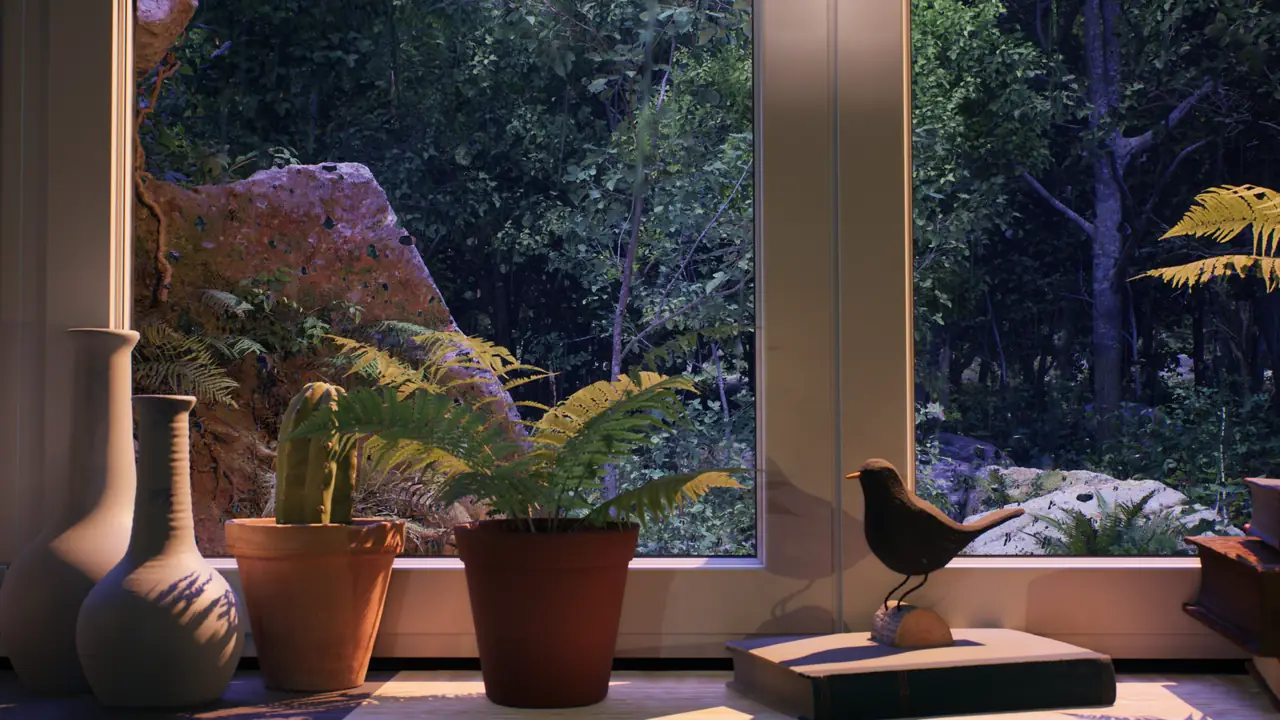
Rainy window ambience can make a television, monitor or projector wall feel less like a device and more like part of the room. A fixed view through wet glass gives the screen a familiar purpose: it can seem to contain weather, distance and changing light rather than a program that needs to be watched.
Rain creates movement without narrative pressure. Drops travel across the pane, reflections shift on a wet street, leaves move slightly and distant lights soften as the weather changes. The image remains alive, but there is no plot to follow, no dialogue to decode and no next scene to anticipate.
The window composition is what makes the format especially convincing. Glass separates the room from the weather, the frame explains the rectangular screen, and the view beyond adds depth to a flat surface. This guide looks at why that combination works on TVs, monitors and projectors, then explains how to choose a rainy window scene for the room and activity around it.
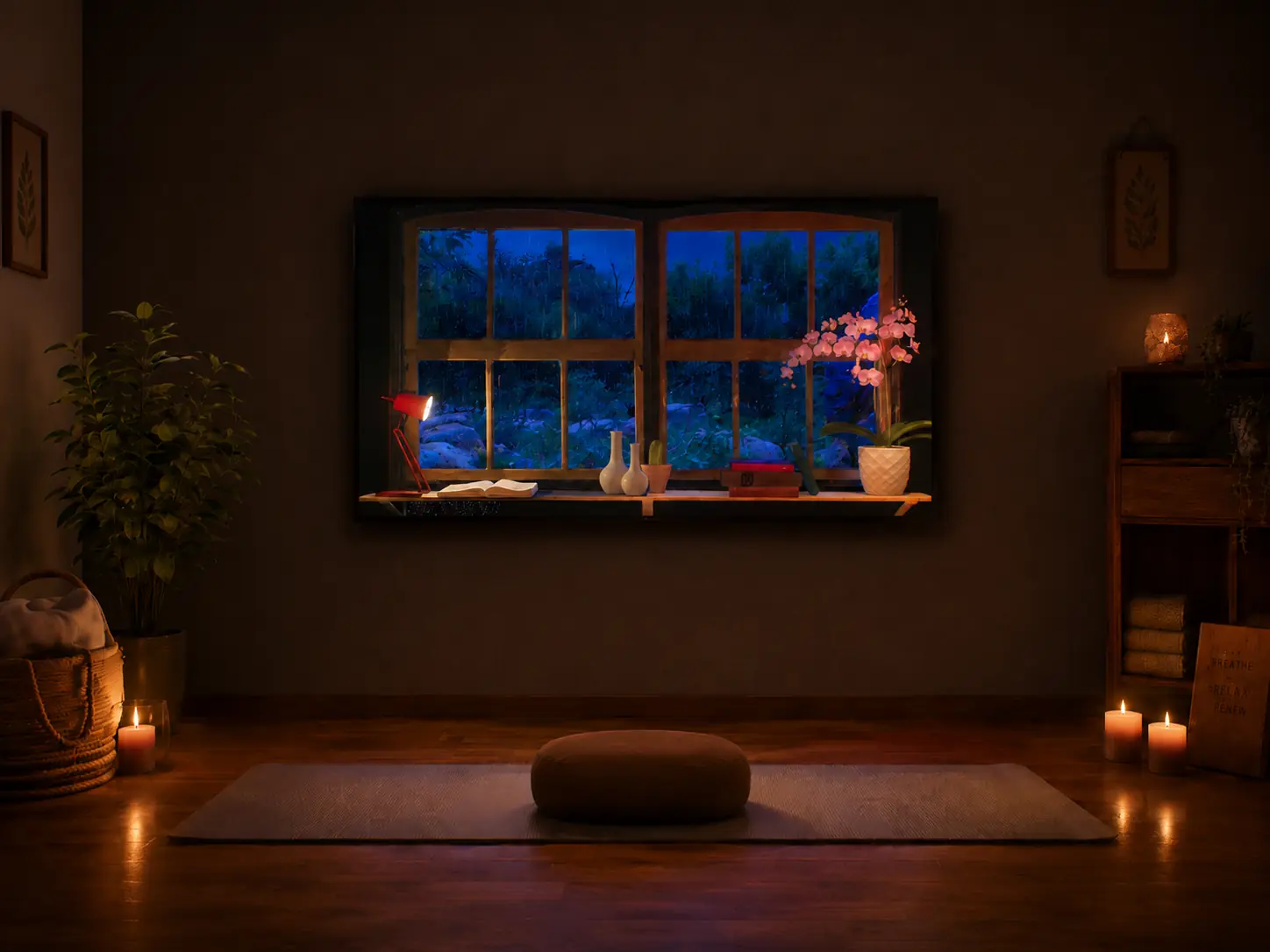
Why rainy window ambience feels natural on a screen
A screen is already rectangular, luminous and flat, so a window view fits its physical shape better than many other kinds of background video. The bezel echoes a window frame. The bright surface suggests outdoor light. When the composition includes a sill, curtains or visible panes, the display gains a simple architectural logic that the eye understands immediately.
Rain on glass adds a useful layer between the viewer and the landscape. Close droplets remain sharp while the city, forest or lake behind them becomes softer. Reflections may appear on both the pane and the wet surfaces outside. Those overlapping distances give the image more depth than a clear landscape shown directly on the screen.
The scene also asks very little from the viewer. There is no beginning you need to catch and no ending you need to wait for. After a few moments, the pattern becomes familiar enough for the video to fade into the background. The display can then behave more like room architecture, a lit picture or a virtual rainy window than a source of active entertainment.
Rain gives motion without asking for attention
The most useful rainy window videos balance continuity with small variation. Drops form and merge on the glass. Slow clouds alter the light. A branch moves at the edge of the frame. Headlights pass in the distance, or a lake surface changes under the rain. Each detail gives the eye something to notice, while the overall composition remains stable.
That stability matters. Fast camera moves, frequent cuts and dramatic changes in color repeatedly signal that new information has arrived. A fixed rain window does the opposite: movement stays within a known frame. It can accompany a book, conversation or quiet task because looking away does not mean missing anything important.
Rain is not automatically calming for everyone. Thunder may feel tense, a very dark scene may seem heavy, and strong flashes or bright reflections can be too active in a bedroom. Personal associations matter as much as the subject. Choose plain rainfall, softer contrast or a lighter natural view when a storm scene makes the room less comfortable.
The window frame creates a feeling of shelter
A rainy window shows weather while keeping it outside. The glass creates a visible boundary: drops and wind belong beyond the pane, while lamps, books and furniture remain on the viewer's side. That separation can give the room a sheltered character without requiring the scene to say anything explicitly.
The outside view still matters because it prevents the image from feeling closed or empty. A wet street suggests a city continuing beyond the room. Trees receding into rain add layered distance. A lake or horizon opens the wall while the window frame keeps that openness contained. The room can feel protected and connected to a wider place at the same time.
This is one reason rainy fake window ambience suits bedrooms, reading corners and quiet evening interiors. Those spaces often benefit from a clear inside-and-outside relationship: warm light nearby, cooler weather beyond the screen. The effect is observational rather than therapeutic, and it depends on whether that kind of weather feels comfortable to the person using the room.
Why rainy windows work better than many background videos
Many beautiful landscape videos are edited as content to watch. They move from mountain to coast, change camera angle or introduce music at regular intervals. That variety is useful when the screen is the main event, but it can keep drawing attention during reading, work or conversation.
Abstract animations can provide slow color and movement, yet they may still feel like decoration applied to a display. Music videos and scenes with dialogue bring stronger rhythm, faces or words into the room. None of these formats is inherently unsuitable; they simply create a different relationship with attention.
Rainy window ambience is unusually easy to understand. The frame has a believable purpose, the weather changes within a stable view and the motion follows familiar physical patterns. Because the screen resembles an opening rather than a sequence of images, it can integrate more quietly with walls, curtains, shelves and lamps.
Choosing the right rainy window scene
Start with the room and activity, then choose the view. Consider how dark the space will be, how far away the screen sits and whether the scene should add warmth, natural color, urban distance or a broader horizon. The best rainy window background is usually the one that remains comfortable after the first few minutes.
City rain
City rain combines architecture, street reflections and distant lights. It works well in evening living rooms, apartments and interiors with warm lamps, dark wood or contemporary furniture. Choose slower traffic and fewer bright signs when the video will stay on during conversation. The City Ambience collection shows how urban windows can range from quiet and restrained to more cinematic.
Forest rain
Forest rain replaces street light with layered greens, trunks and small movements in leaves. It suits reading, studying and rooms with plants, wood or matte textiles. A bright daytime forest can support a desk in the afternoon, while a darker blue-green view is easier to live with after sunset. Browse Forest Ambience for both clear and rainy natural windows.
Lake rain
Lake rain gives the image a calmer horizon and more open distance. It can make a projector wall or a compact room feel less enclosed, especially when the surface of the water remains gentle. Bedrooms and sofa-facing screens often benefit from this simpler composition. Avoid an extremely bright horizon at eye level if the scene will run for a long time.
Dark rainy windows
Darker windows fit late-evening routines and low-light rooms because they produce less contrast against the surrounding wall. Look for slow rain, restrained highlights and few sudden changes. Near bedtime, lower the display further and set a sleep timer. A dark scene can support the room's evening atmosphere, but the screen should not become a requirement for falling asleep.
The Rain Ambience collection brings together city, forest, lake, candlelight and gothic rain scenes so their light, depth and character can be compared in one place.
TVs, monitors and projector walls
TV
A TV works naturally as a rainy window because its shape and border already resemble a framed opening. It is practical in living rooms and bedrooms, easy to start and bright enough for normal evening light. Lower the brightness, choose a calm picture mode and hide menus, controls and notifications. A stable long-form video will feel more integrated than a playlist that changes scenes unexpectedly. For the basic YouTube, HDMI and source/input steps, use the fake window setup guide before fine-tuning the mood.
Monitor
A monitor is useful at a desk or on a side surface where a full television would be too large. Place rainy ambience beside the main task rather than directly behind documents, calls or editing work. Keep the volume muted or very low if sound competes with concentration. Used as a secondary view, the monitor can provide visual distance without becoming another source of tasks and alerts.
Projector wall
A projected rainy window can feel more architectural because the image appears on the wall without a permanent black panel. It needs better light control, a clear throw path and a clean matte surface. Keep the image at a believable, comfortable scale; filling every part of the wall can make the scene overwhelming rather than window-like. The fake window projection guide covers wall choice, placement, brightness and alignment in more detail.
Matching rainy ambience to the room
Bedroom
Choose darker rain, slow movement and limited contrast. Set the brightness before getting into bed so a bright menu does not interrupt the room, then use a timer to turn the screen off. Low sound or silence is usually easier to manage than prominent thunder. Treat the video as one optional part of a bedtime routine, not as a sleep treatment or something the room must always provide.
Living room
A living room can support more visual detail. City rain, lake rain and combinations of candlelight ambience with wet streets work during a quiet meal, reading or conversation. Check the composition from more than one seat and keep the display below the brightness of the main lamps, especially when the screen is large.
Reading corner
Forest, lake and gothic rain each give a reading corner a different character. Place the screen beyond the book rather than beside it, where moving highlights could compete with the page. Match the brightest parts of the image to the nearby reading lamp. A scene with a fixed frame and distant movement will usually be easier to ignore than close traffic or repeated lightning.
Home office
Keep rain ambience outside the main task area, ideally on a side monitor or wall-mounted screen. Muted video often works better for focus because it avoids covering voices, alerts or other useful sounds. Think of the view as a place to rest the eyes briefly, not a second stream of information. If you keep checking it, choose a simpler composition or reduce its brightness.
Small setup details that strengthen the illusion
Begin with a restrained picture mode. Vivid and Dynamic presets increase brightness, color and motion processing to attract attention. Cinema, Filmmaker, Standard or a moderate custom preset usually gives rainy glass and shadow more natural weight. Lower brightness until reflections no longer become the strongest light in the room, while keeping enough detail to read the frame and view.
Use warm side lamps instead of relying only on a ceiling light. Move lamps away from direct reflections on the screen and close curtains if outdoor glare washes out the image. Sound should feel like distant weather, so begin near mute and raise it only if it supports the activity. Silence is entirely appropriate for reading, work and conversation.
Hide progress bars, player controls, captions, notifications and device menus once playback begins. Check autoplay so a bright or unrelated video does not replace the scene. Curtains, plants, books, textiles and matte surfaces can connect the display to the room when those objects already fit the decor. A few quiet references are enough; too many props make the setup feel staged.
The central principle is simple: the rainy window should support the room rather than dominate it. A smaller image, lower volume or slightly darker setting often improves the effect more than additional equipment.
A simple rainy window ambience routine
- Choose the room and activity before choosing the video.
- Pick city, forest, lake or dark rain to match the light and mood.
- Start playback before dimming the room.
- Lower brightness until the image feels close to the surrounding lamps.
- Keep sound low or mute it when the activity needs quiet.
- Hide controls, captions and notifications.
- Use a timer for bedtime or long evening sessions.
Small adjustments matter more than expensive equipment. Test the scene from the chair, desk or bed where it will actually be seen, then change one setting at a time. A familiar screen, a stable video and balanced room light are usually enough.
Finding the right rainy window for your screen
The best rainy window is not necessarily the most spectacular. It is the one that feels easy to live with: a quiet city beyond dinner, a forest at the edge of a desk, a lake behind a sofa or a darker pane during the last part of the evening. Room light, activity and personal association should decide more than dramatic effects.
Browse the Rain Ambience collection to compare rainy city, forest, lake, candlelight and gothic windows, or explore the full video gallery for other long-form views. For a more setup-focused approach, the rain ambience for TV guide covers picture, sound and domestic use in greater detail.
Mini FAQ
Why does rainy window ambience work well on screens?
It combines gentle movement, familiar weather, optional soft sound and a clear window composition. The frame explains the shape of the display, while rain on glass and the view beyond add depth without creating a story to follow.
Can I use rainy window videos on a TV?
Yes. A TV works well because its rectangular shape already resembles a framed window. Choose a stable long-form video, lower the brightness and hide controls, notifications and autoplay interruptions.
Can I use rainy window ambience on a projector?
Yes. It works best when room light is controlled and the projection surface is clean, smooth and matte. Keep the image size comfortable and believable rather than filling the wall automatically.
Is rainy window ambience good for sleep?
It can support a calm bedtime routine for some people, but it is not a sleep treatment. Use a darker scene, low brightness, low or muted sound and a timer, and turn it off if the screen makes rest less comfortable.
Should the rain sound be on?
Only if it helps. Keep it low enough to sit behind the main activity. For reading, focused work or conversation, muted rainy window video can provide the same visual atmosphere without adding sound.
What kind of rainy window scene should I choose?
City rain suits evening atmosphere, forest rain works well for reading or studying, lake rain adds open depth, and darker rain is easier to integrate late at night. Personal preference and room light matter more than any universal choice.
Explore long-form ambience scenes on the Window Ambience Studio channel.
Watch on YouTube →