Snowy city windows
A city in snowfall keeps the depth and lights of an urban view while softening the whole composition. It works well in living rooms and bedrooms because the winter atmosphere remains calm rather than busy.
Snow ambience
Snow ambience gives a screen a quieter seasonal role than ordinary television. A snowy window replaces menus and idle interfaces with a stable winter view, often combining falling snow, cool outdoor light and a warmer interior edge that helps the room feel protected rather than empty.
This theme works well on TVs and monitors because snow moves slowly. The flakes provide visible motion, but the scene remains calm enough for evening reading, background decor, rest or a soft winter atmosphere during conversation. The effect is decorative first, not narrative.
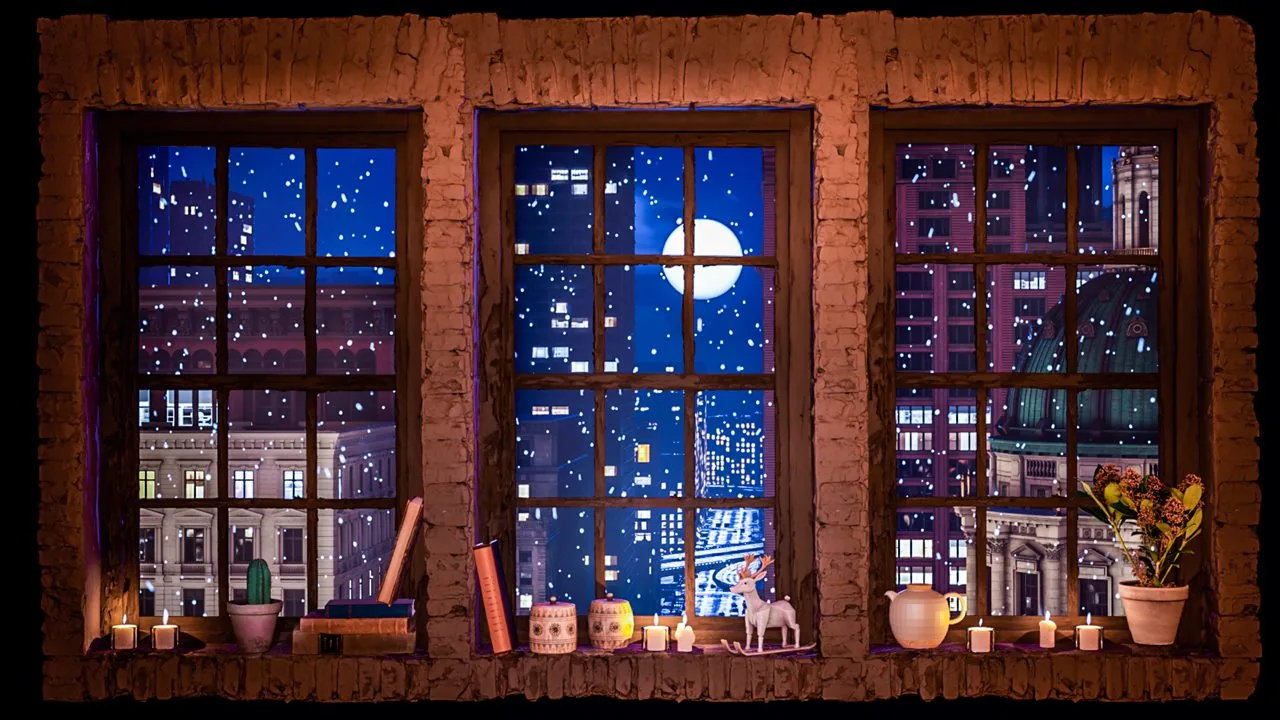
In Window Ambience Studio, the current snow scene pairs a city view with candles and interior warmth. That combination keeps the image from feeling clinically cold: the weather stays outside while the interior side of the frame still reads as sheltered and inviting.
Use snow ambience when you want a seasonal fake window, a calmer winter background on a quiet screen or an alternative to a brighter decorative loop. The best result usually comes from restrained brightness, a believable screen size and a room that already supports the softer evening mood.
Soft winter motion
Snow is visually active without becoming urgent. Falling flakes, distant lights and muted outdoor movement give the eye enough change to keep the display alive, yet the scene usually remains easier to ignore than a news feed, music video or ordinary entertainment content.
Winter scenes also benefit from contrast. Blue or gray exterior light feels calmer when it sits beside candlelight, dark frames, textiles or wood tones inside the composition. That indoor-outdoor contrast helps a TV feel less like exposed electronics and more like a deliberate seasonal opening in the room.
Because snow often implies muffled sound and slowed activity, it suits quiet spaces particularly well. Even with audio muted, the visual rhythm supports reading corners, bedrooms and calm evening rooms. When sound is used, it should stay understated enough that the room still leads the experience.
The theme is narrower than rain because it is more seasonal, but that focus can be useful. A dedicated snow page helps visitors choose a winter screen mood directly instead of scanning mixed ambience categories.
Choose the winter effect
Snow scenes are usually quieter than rain or city movement. The main choice is how much seasonal contrast and warmth you want around the screen.
A city in snowfall keeps the depth and lights of an urban view while softening the whole composition. It works well in living rooms and bedrooms because the winter atmosphere remains calm rather than busy.
Candles, lamps, or candlelit decor on the interior side of the frame keep a snow scene from feeling visually cold. This contrast is often what makes the ambience feel cozy instead of merely wintry.
Snow ambience can function as a seasonal decor layer even when nobody is actively watching it. It replaces a black screen with a stable winter presence for dinners, evenings at home or quiet hospitality settings.
If a bright seasonal visual feels too literal or repetitive, a snowy window can offer warmth indirectly through contrast, light and shelter. It keeps the same calm-room intention with a different visual center.
Current snow scene
The current catalog includes one dedicated snow-led video. It covers the main winter use case well: a sheltered room looking onto a snowy city with enough movement to animate the screen without turning it into a spectacle.
Use it as a starting point for winter decor, winding down before sleep, or creating a seasonal fake window on a TV or projector wall.
Snow ambience
A snowy city window with candlelight and cozy decor creates a restrained winter screen mood. It suits bedrooms, evening living rooms, calm waiting spaces and projector setups that need a cooler seasonal view without losing warmth indoors.
Watch on YouTubeRoom ideas
Snow ambience usually works best in rooms that already have a softer evening pace, where the screen can feel decorative rather than cinematic.
Lower brightness and keep the snow scene dim enough that it feels like a winter window rather than a lamp. The slower movement can work well during a bedtime routine or a quiet early evening.
Snow ambience can replace idle TV content during dinners, reading or winter evenings. Pair it with warm lamps and keep the screen supportive, not brighter than the social space around it.
A secondary monitor, framed TV or compact projector wall can use a snowy window as part of a broader winter decor setup. The effect is strongest when nearby objects already support the season: textiles, wood, candles or plants.
A snowy window can also suit a calm waiting area, spa corner or reception zone during colder months, especially where a black inactive screen would otherwise feel unfinished. Venue use still requires appropriate playback rights and operational review.
Simple setup tips
Winter scenes look best when they remain integrated with the room. Small display choices usually matter more than adding equipment.
Snow can clip quickly on vivid picture presets. Reduce brightness until flakes, window frames and distant lights remain distinct without making the whole room glow.
A nearby lamp or candle-like light source helps the interior side of the image feel intentional. Without that contrast, the scene can look colder and flatter than intended.
Snow scenes often work perfectly well in silence. If you use sound, keep it soft enough that the atmosphere remains background decor rather than an active soundtrack.
On a projector wall, a moderate window-sized frame usually looks more believable than a huge full-wall winter image. Treat the setup like a virtual opening, not a cinema screen.
For colder weather alternatives with more visible motion, compare the Forest Ambience page and its rainy, greener nature window scenes.
For wall sizing, throw distance and room placement, use the Projection guide before building a larger winter fake window.
Related guides
Snow is one branch of the broader fake-window catalog. These pages help if you want a different season, more weather or a wider comparison set.
Move toward greener nature scenes when you want woodland depth, birds or rainy shelter instead of a winter city mood.
Compare city, lake, forest and gothic rain scenes if you want more weather movement and a less seasonal room effect.
Use the projection guide for believable sizing, wall choice and light control.
Browse the wider comparison page to choose among snow, rain, candlelight and fantasy environments by room and use case.
Frequently asked questions
Practical answers for using long-form snowy window scenes on TVs, monitors and projector walls.
Snow ambience is a long-form visual or audio environment built around snowfall, winter light and a steady cold-weather scene. On a screen it often appears as a snowy window designed for background decor, rest and calm rooms.
It can be, especially when the image is dim and the scene moves slowly. Many people use snowy window videos for winding down because the motion is gentle and the winter palette stays quiet.
Yes. Snow ambience can work on a projector wall when the image remains at a believable window size and the room light is controlled. Avoid turning bright snow into a glaring wall-sized panel.
Snow ambience creates warmth indirectly through contrast between the cold outdoors and the sheltered room, while candlelight ambience uses small warm highlights as an interior accent. Both can support calm evening spaces, but they create different focal moods.
Choose your scene
Watch the long-form snow scene on the Window Ambience Studio channel, or compare it with rain, forest, candlelight and projection-friendly setups across the full catalog.