
Wall-facing room
Use soft curtains or a sheer layer to reduce the visual weight of the wall outside. Create a second focal point inside the room so the bed or seating area is not oriented only toward the window.
Hotel room view solutions
A room facing a wall or parking lot does not have to feel like a compromise. Good lighting, an intentional focal point and a calm indoor atmosphere can make an awkward view feel less dominant.
The guest experience
Guests often experience the view as part of the room, even when they spend limited time looking outside. A blank wall, service yard or parking area can make an otherwise comfortable room feel less thoughtfully designed.
The practical response is not to hide the real window or make misleading claims. Instead, strengthen the parts of the room the hotel can control: lighting, furniture orientation, curtains, artwork and the atmosphere created inside.
Common situations
Use soft curtains or a sheer layer to reduce the visual weight of the wall outside. Create a second focal point inside the room so the bed or seating area is not oriented only toward the window.
Control glare and privacy first. Warm interior lighting, framed artwork and a calm screen scene can shift attention away from vehicle movement and hard exterior lighting.
Privacy films, layered curtains and careful lamp placement can make the room feel protected without making it dark. Keep circulation clear so the room still feels open.
A softer strategy
A difficult view becomes less dominant when the room offers a more appealing interior composition. Bedside lighting, textured fabrics, a reading chair and one strong visual feature can give the guest several comfortable places to look.
A TV or projector can support that composition with a long-form ambience scene. The aim is not to present the video as the actual exterior view. It is a controllable visual atmosphere for evening, reading or quiet background use.
Example atmospheres
A restrained urban rain scene can suit city hotels and evening stays, especially when it echoes the room’s existing dark metal, stone or warm lighting.
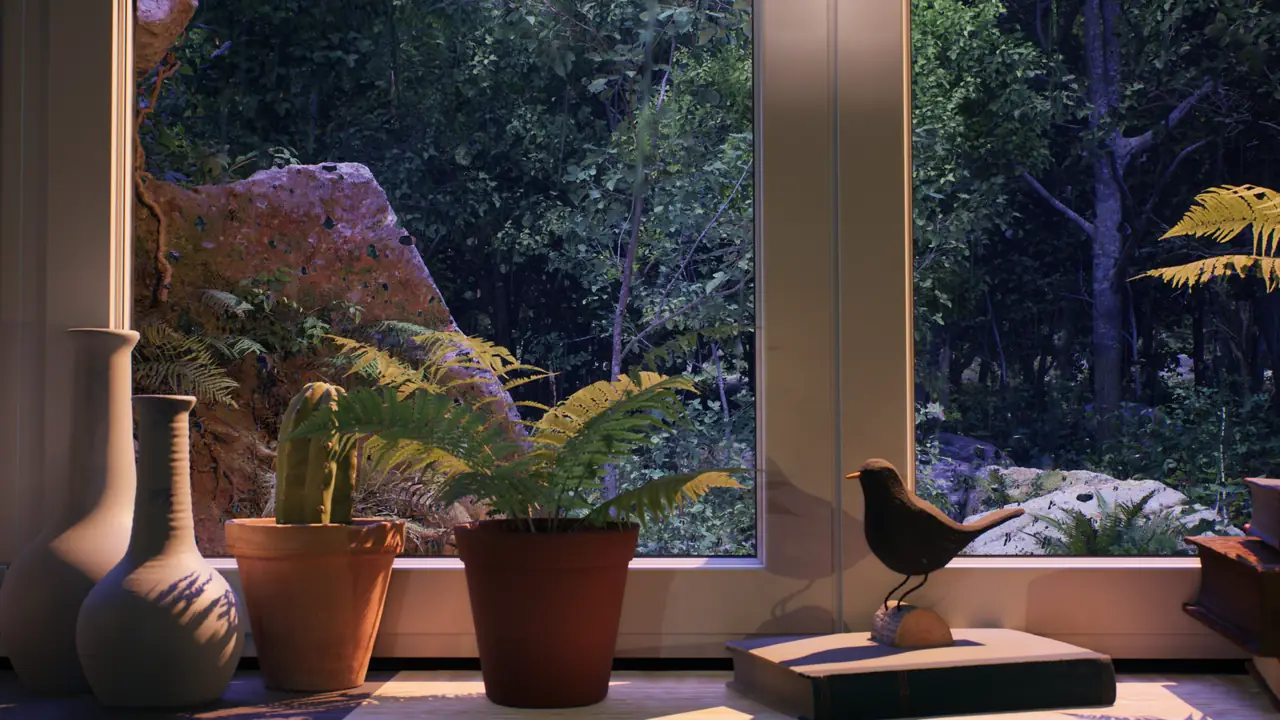
Forest depth can soften rooms that face hard architecture. It works well with natural materials, muted green accents and quiet wellness positioning.
An ocean horizon creates visual space and can support coastal or relaxation-focused interiors. Choose slow water movement rather than dramatic waves.
Snow and warm interior light can make a compromised winter view feel less central by creating a cozy, deliberate evening mood inside.
Screen setup
The simplest option for most guest rooms. Use a low brightness setting and make the ambience easy to start, stop or replace with regular television.
A smaller screen can work near a desk, reading chair or refreshment area where a full-size TV would feel too dominant.
Projection can create a larger visual feature in suites, lounges or concept rooms. It requires careful control of room light, alignment and guest operation.
Plan the setup
Explore the main professional page, compare screen options, browse the video library or discuss a specific venue.
See the main overview for guest rooms, treatment spaces, lounges and waiting areas.
Compare a TV, monitor and projector wall, then plan brightness, placement and sound.
Browse rain, forest, ocean, snow, city and other long-form window scenes.
Describe the venue, room type and intended use to Window Ambience Studio.
FAQ
Ways to respond to awkward outlooks without misrepresenting the room.
Use layered curtains, warm lighting and an interior focal point that draws attention into the room. A calm screen-based ambience can support the room in the evening, but the hotel should still describe the real view accurately.
Prioritize privacy and glare control, then use lighting, textiles and artwork to create a stronger indoor atmosphere. Slow city, forest or rain ambience can make an idle TV feel more intentional.
No. It should be presented as visual ambience, not as a replacement for daylight, ventilation or an exterior view. Its role is to add atmosphere inside the room.
It can be practical in selected suites or concept rooms when alignment, brightness, controls and maintenance are planned carefully. A wall-mounted TV is usually the simpler option for standard rooms.
Window Ambience Studio
Use calm screen-based visuals as one part of a considered hotel, spa or waiting-room interior.