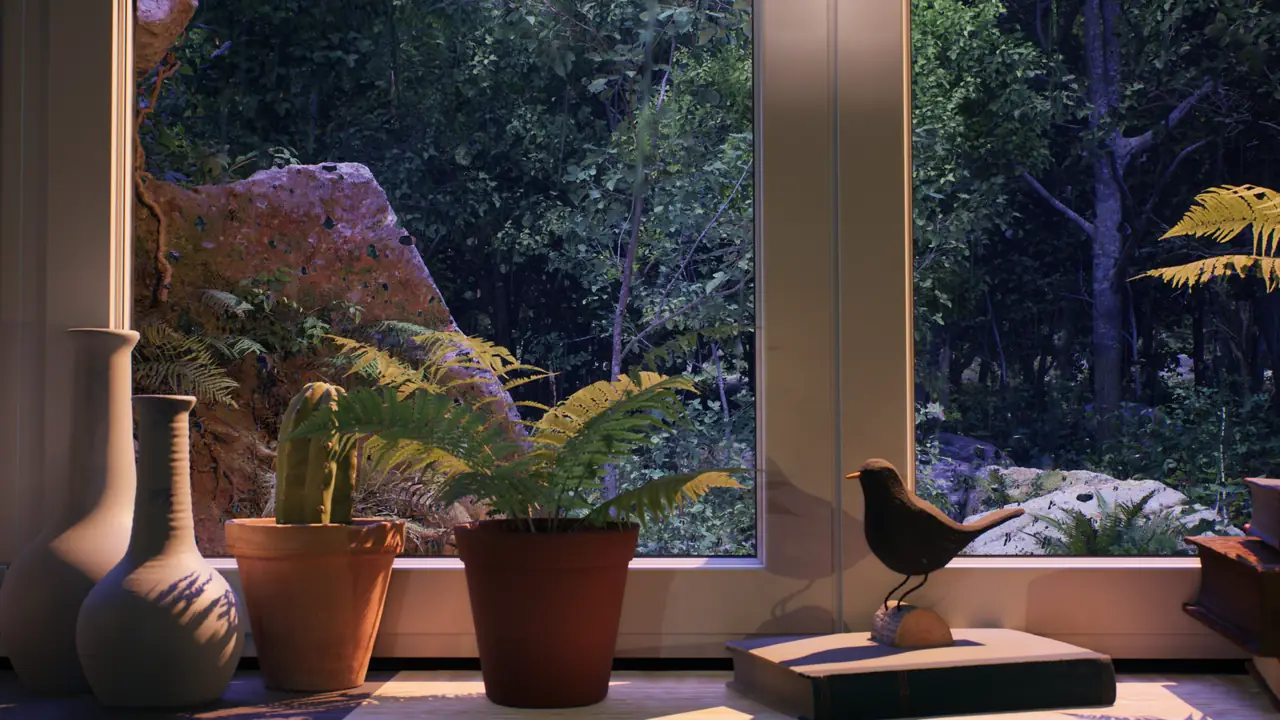
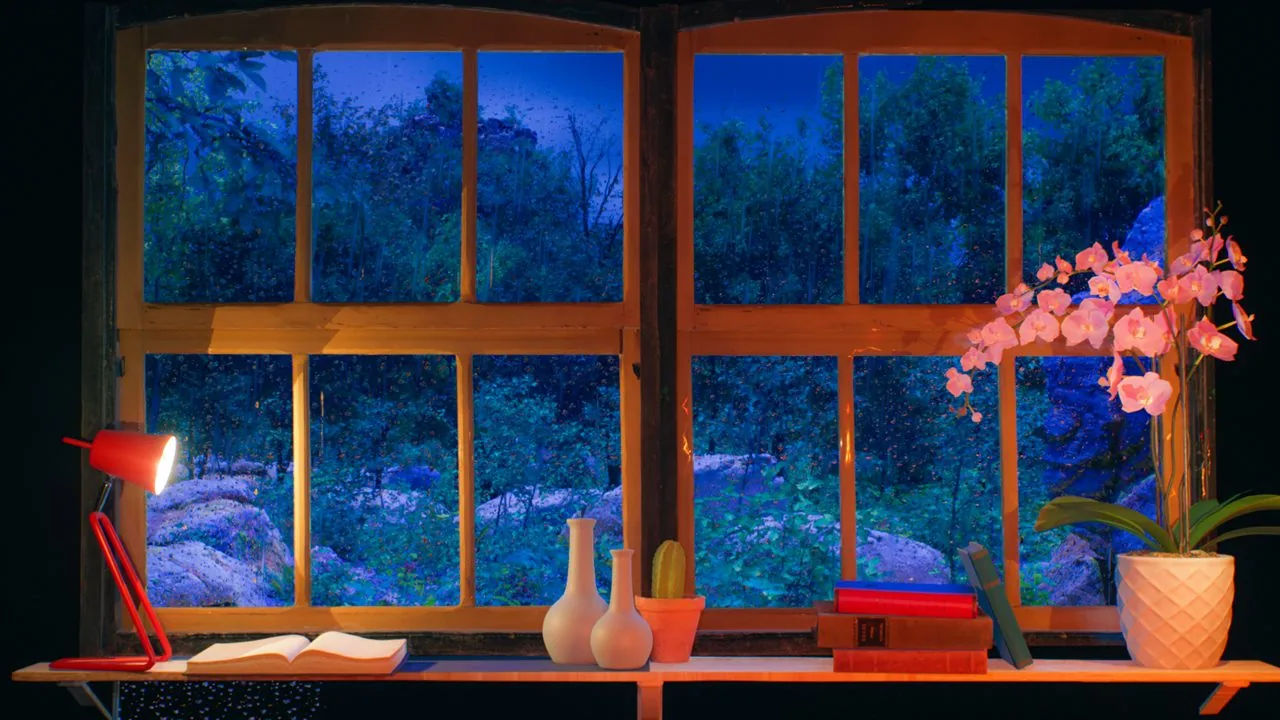
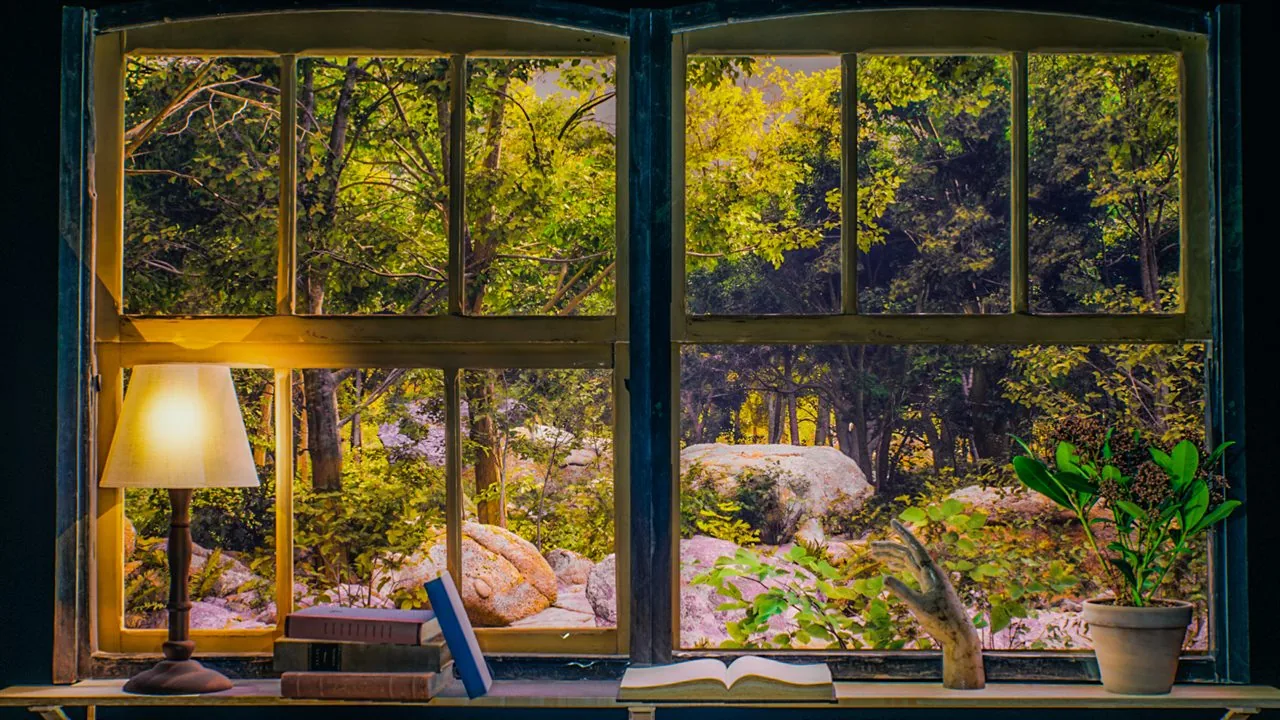
Forest ambience gives a screen a slower visual role than ordinary TV playback. Instead of menus, thumbnails or a paused interface, the display becomes a stable nature-facing window with trees, leaves, weather and depth beyond the frame. That shift is useful when you want the room to feel calmer without turning the screen into the main event.
Nature scenes work especially well on quiet screens because they provide movement without narrative pressure. A branch sways, distant foliage changes tone, rain passes across the view or birds and thunder suggest outdoor life, yet the composition remains easy to leave in the background for reading, working, resting or conversation.
Within Window Ambience Studio, forest scenes sit between interior shelter and outdoor immersion. The viewer is usually placed just inside a room, near plants, books or warm decor, while the exterior remains green, misty or rain-soaked. This contrast helps a TV, monitor or projector wall feel more like a deliberate virtual opening than a bright rectangle on the furniture.
Use forest ambience on a bedroom TV, on a second monitor in a study, or on a projector wall when a city scene feels too active. The most convincing result usually comes from a moderate image size, restrained brightness and a soundtrack that supports the room instead of dominating it.