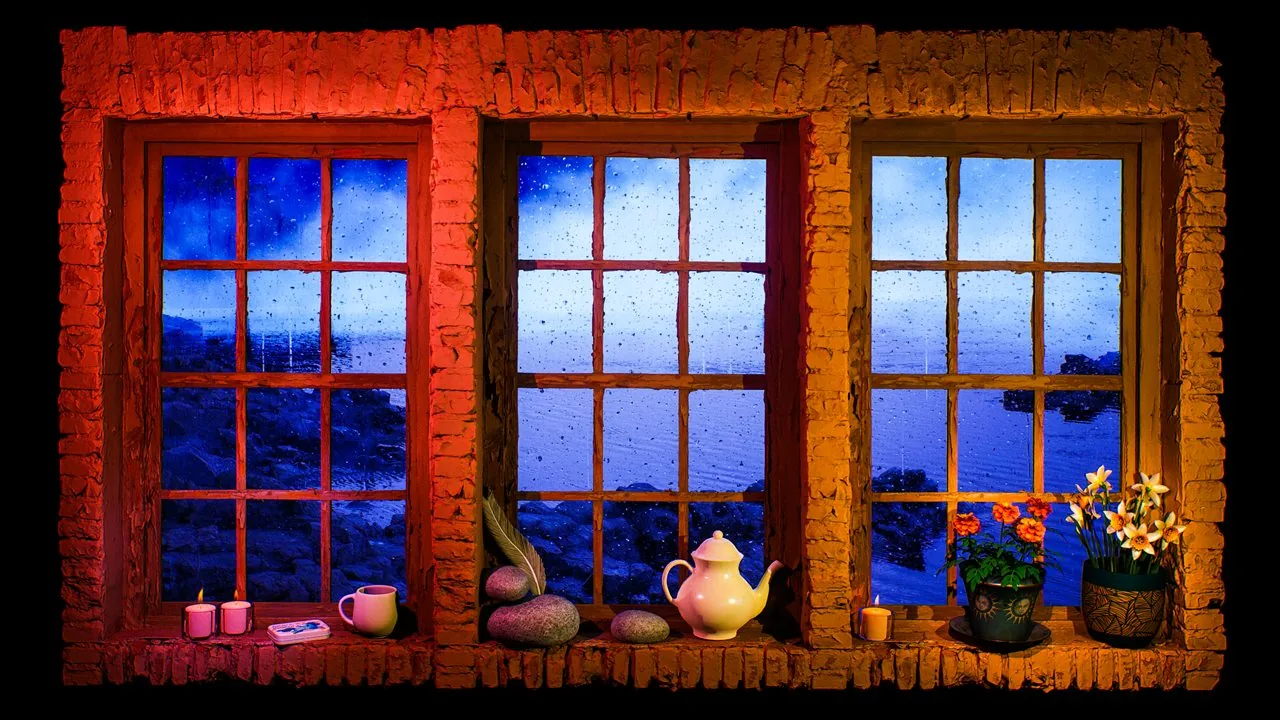
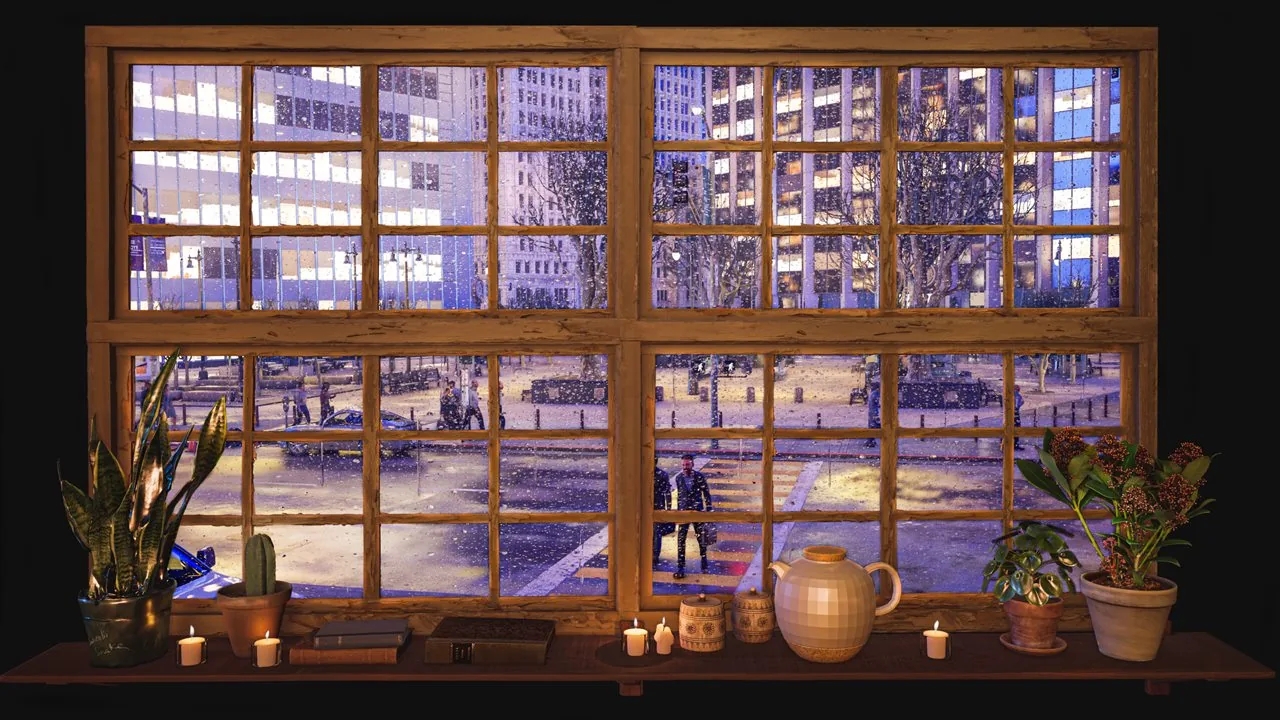
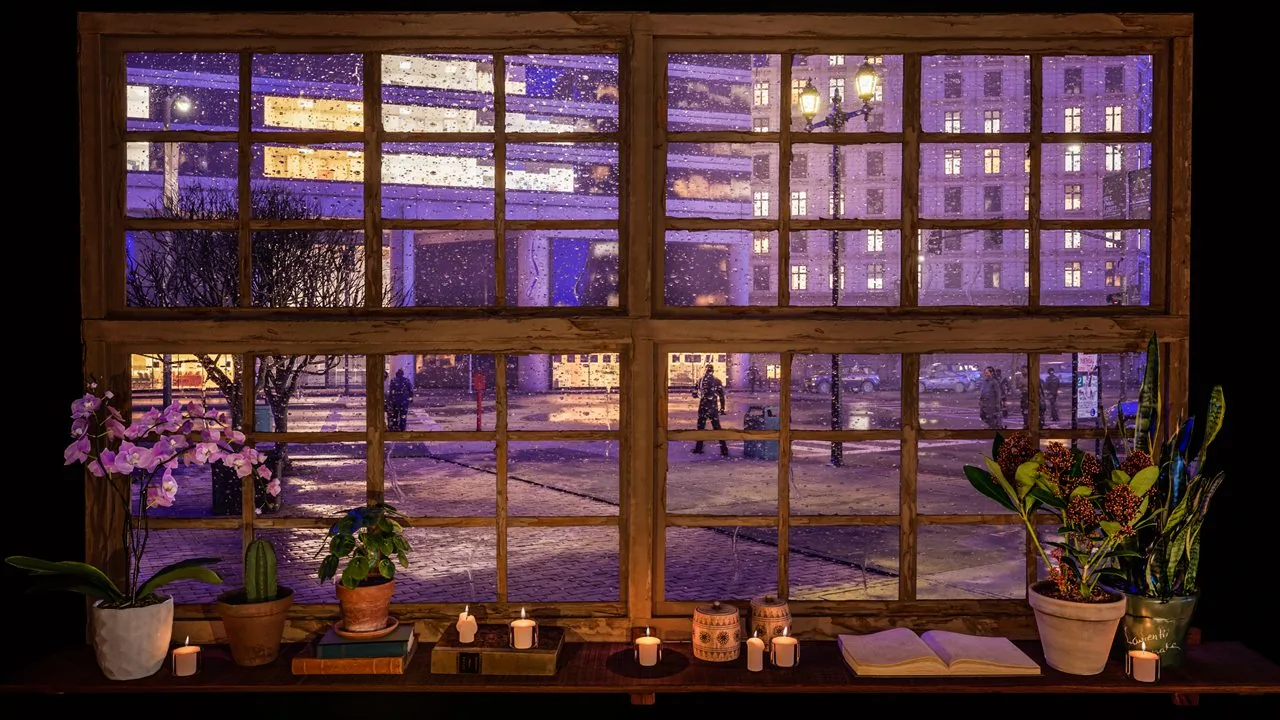
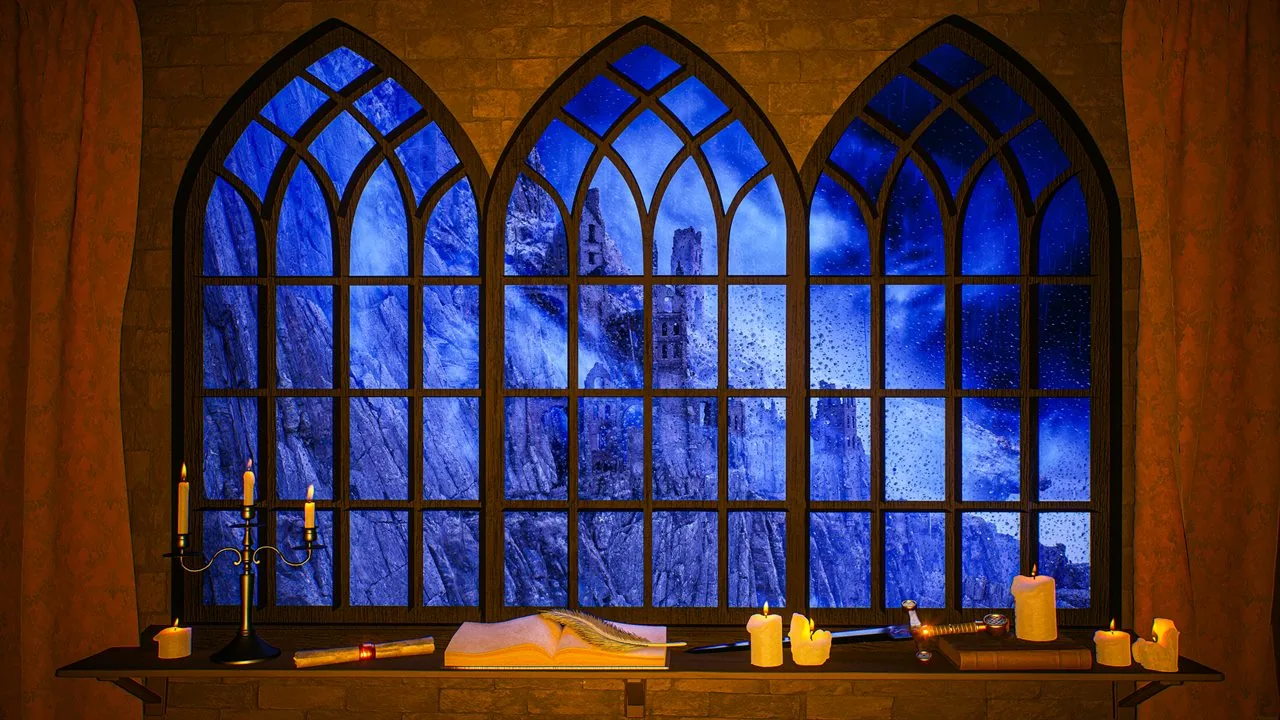
Rain ambience can turn a TV, monitor or projector wall into a slow-moving view rather than a bright inactive rectangle. A rainy window gives the screen a clear visual role: weather stays beyond the frame while the real room feels sheltered, quiet and separate from it.
The format suits background use because rain creates movement without requiring a story. Droplets, reflections, distant traffic, leaves and water surfaces can keep changing while the camera remains stable. The image stays alive during reading, rest, focused work or an evening conversation without asking to be watched from beginning to end.
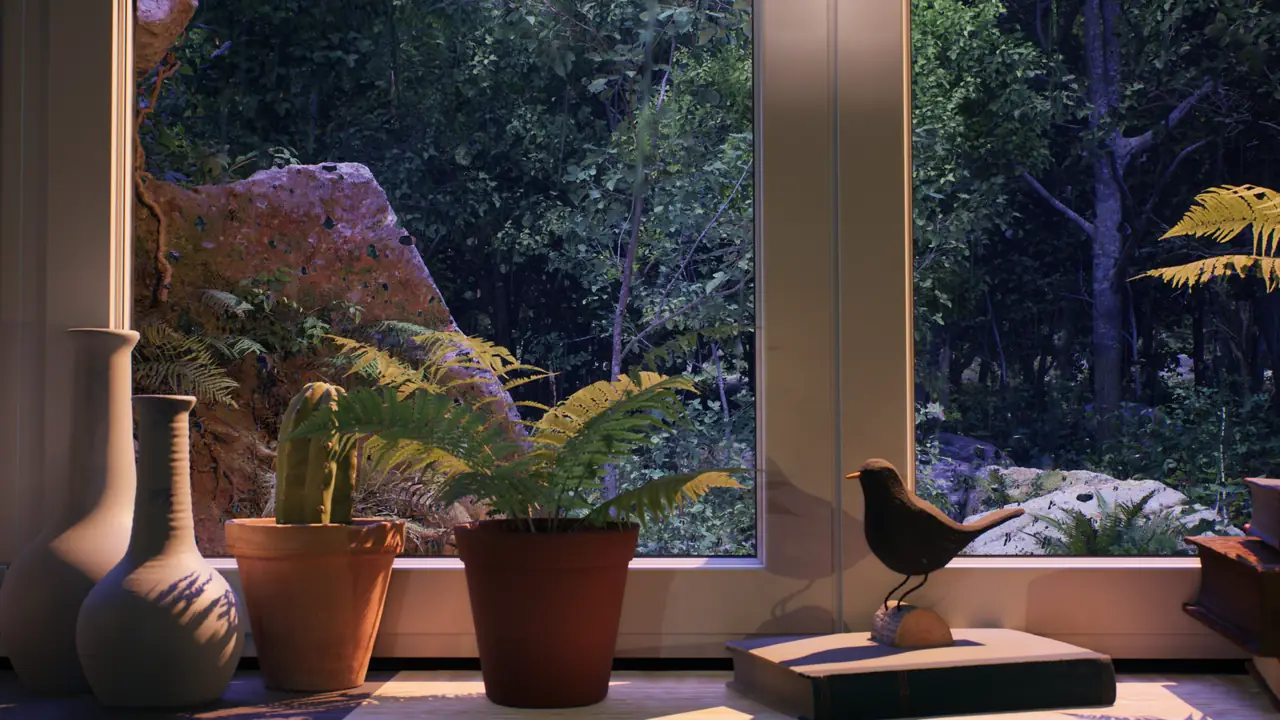
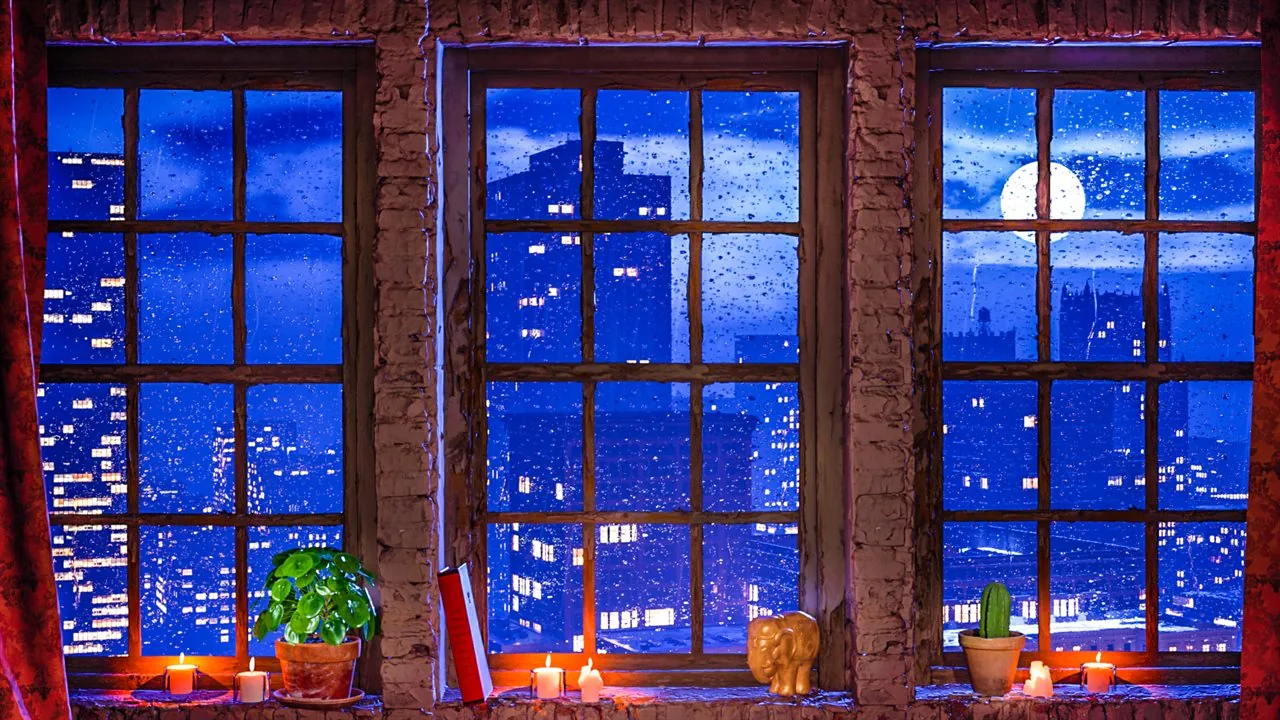
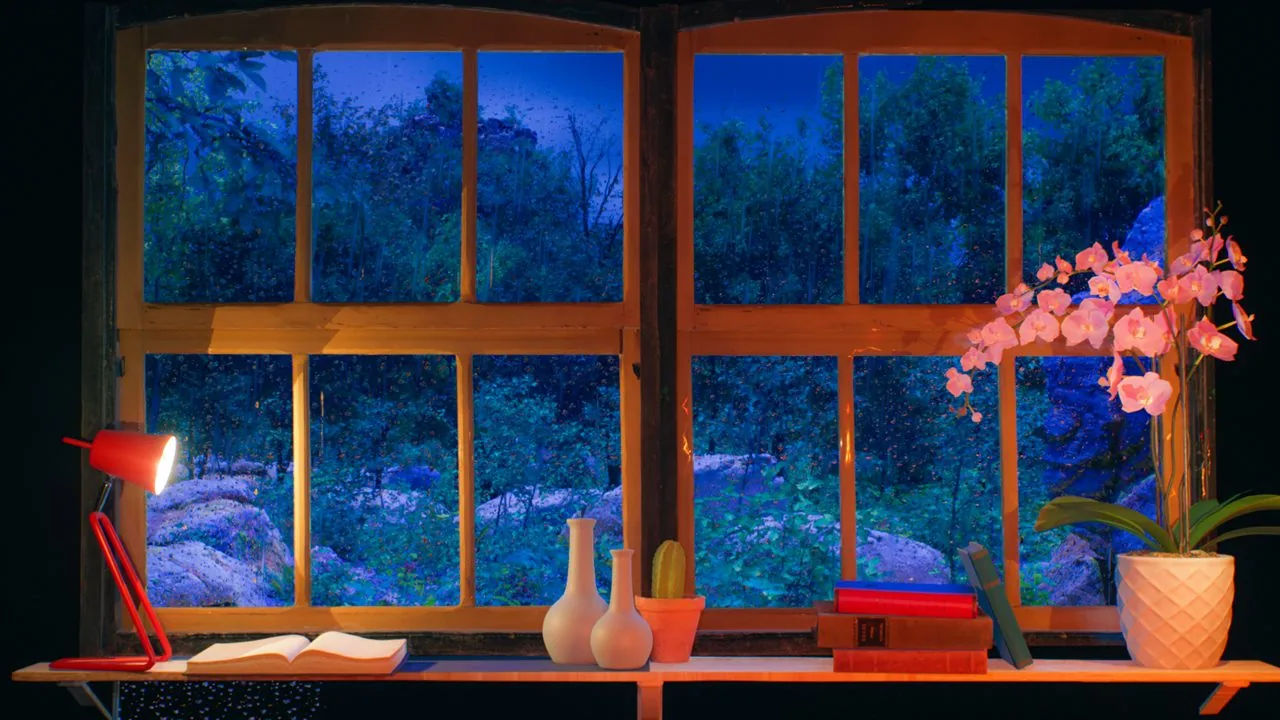
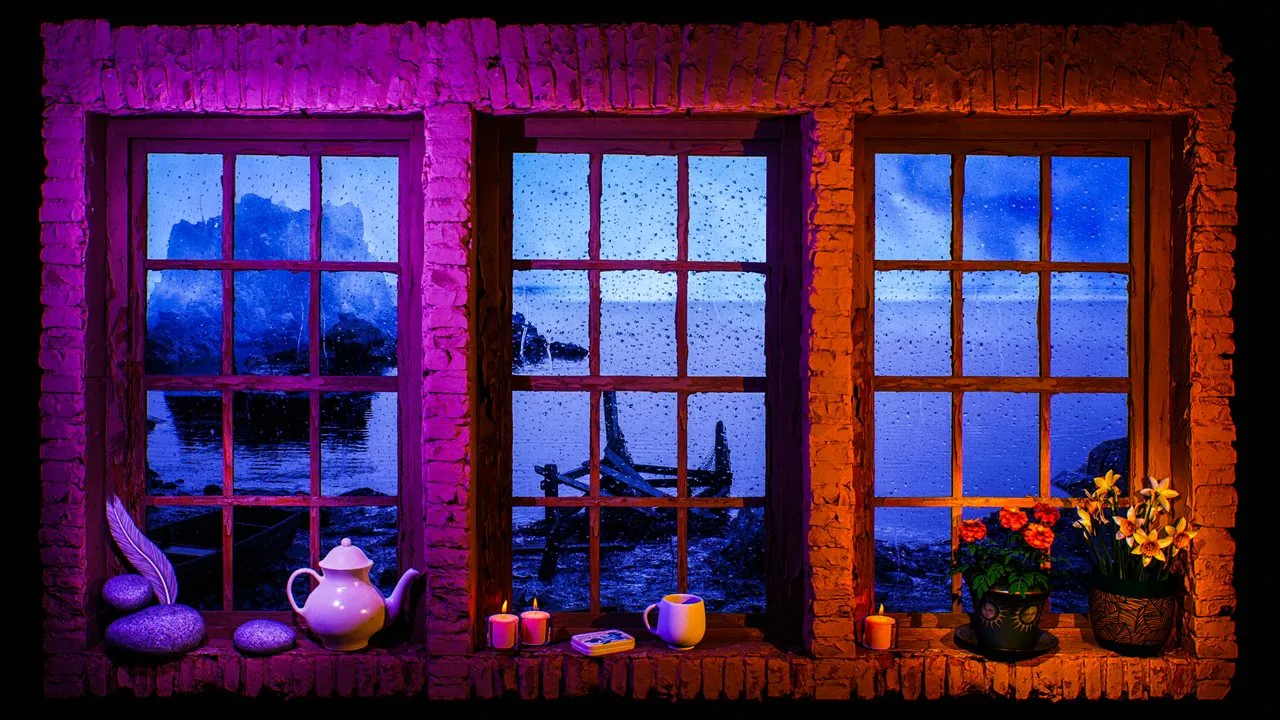
Window Ambience Studio builds original 3D rain environments around city windows, forests, lakes and gothic architecture. Each scene uses a different balance of exterior weather and interior light, so the same broad theme can feel modern, natural, cozy or cinematic depending on the room.
Use the collection as rain ambience for TV, as a rainy window screen in a bedroom or office, or as a larger fake window view on a controlled projector wall. The most convincing setup is usually the simplest one: a long scene, restrained brightness and sound that stays below the activity in the room.