
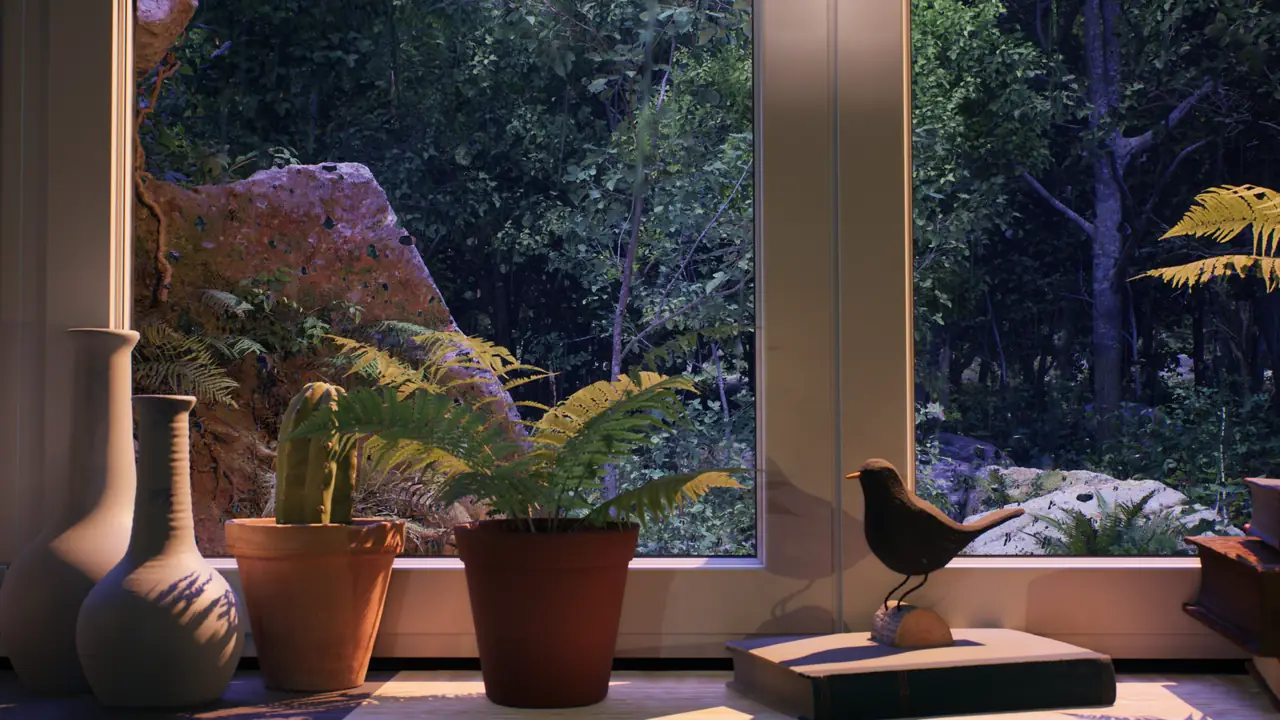
Rainy city night
A darker rainy city scene uses reflections, wet streets and cool exterior light to create shelter and depth. It works well in bedrooms, reading corners and living rooms where the screen should stay calm and atmospheric.
City ambience
City window ambience can make a screen feel like part of the room's architecture, not just a decorative display. Instead of a black rectangle or a bright idle menu, the TV or projector shows a believable urban exterior: rain on glass, distant buildings, moving headlights, pedestrians and the slow light of evening. The room keeps its own quiet purpose while the view beyond the frame suggests life continuing outside.
This works particularly well in apartments, bedrooms and living rooms that already use lamps, shelves, curtains or warm materials. Urban scenes can feel familiar without becoming banal because the city provides depth, weather and soft movement that remain readable from across the room. The result feels more open than a closed-in interior scene, but usually more sheltered than a wide landscape or ocean horizon.
Window Ambience Studio approaches this theme through original 3D city interiors and slow exterior compositions. Some scenes are rainy and intimate, some broader and quieter, and some combine urban weather with visible candlelight indoors. Together they cover the calm side of city life rather than traffic-heavy spectacle.
Use these videos as city window ambience for TV backgrounds, as a projector-based fake window in an evening room, or as a quiet urban screen when you want movement without a narrative. The most convincing setups usually rely on stable framing, restrained brightness and sound that supports the room rather than filling it.
Urban calm
A city view stays active even when nothing dramatic happens. Headlights pass, reflections shift, weather changes the glass, and a few distant figures cross the frame. These small events give the image enough life to keep the screen from feeling dead, but not so much activity that it demands focused viewing. For background use, that balance is often more useful than either a static still image or a fast-moving clip.
Urban scenes also create a specific emotional contrast. The world outside appears larger, cooler and slightly exposed, while the room on this side of the glass feels protected. That shelter effect is especially strong when the scene includes candles, warm lamps or candlelit tones inside. The city does not need to be loud to feel present; a restrained street can make the room feel more settled simply by existing beyond the window.
Compared with nature ambience, city window ambience usually feels more structured and legible in modern interiors. Straight lines, lit windows, roads and building depth often integrate naturally with contemporary furniture, desks and apartment layouts. Compared with candlelight ambience, city scenes keep a stronger sense of outside life and scale.
The theme is also flexible across use cases. A rainy night can support sleep and reading, a broader evening street can sit quietly in the background during dinner or conversation, and a snowy city can create a winter-facing screen without turning the room into a holiday display. The core requirement is not realism in every detail, but stable framing, slow rhythm and an urban mood that remains comfortable over time.
Choose the city mood
The same urban theme can feel intimate, open, warm or seasonal depending on the framing and interior cues around the window.
A darker rainy city scene uses reflections, wet streets and cool exterior light to create shelter and depth. It works well in bedrooms, reading corners and living rooms where the screen should stay calm and atmospheric.
A broader evening composition gives a wider view of the street and a little more visible movement. Choose it when the room can support an active background, but you still want the pace to remain soft enough for conversation, work or long sessions.
Some city scenes bring visible interior warmth into the frame through candlelight, warm lamps or amber tones. This combination keeps the outside world present while making the room feel warmer and more domestic.
Snow softens the city and slows the visual rhythm. A snowy urban view can feel seasonal without becoming festive, which makes it useful for winter evenings, quiet decor and calmer long-form playback.
Four city scenes
The current city collection focuses on four long-form urban window scenes already active in the catalog. Together they cover rainy intimacy, broader evening movement, interior warmth and winter quiet while preserving the slow pacing needed for background use.
Every card below links to the official YouTube video. Start with the scene whose weather, scale and warmth already match the room where the screen will play.
Rain ambience
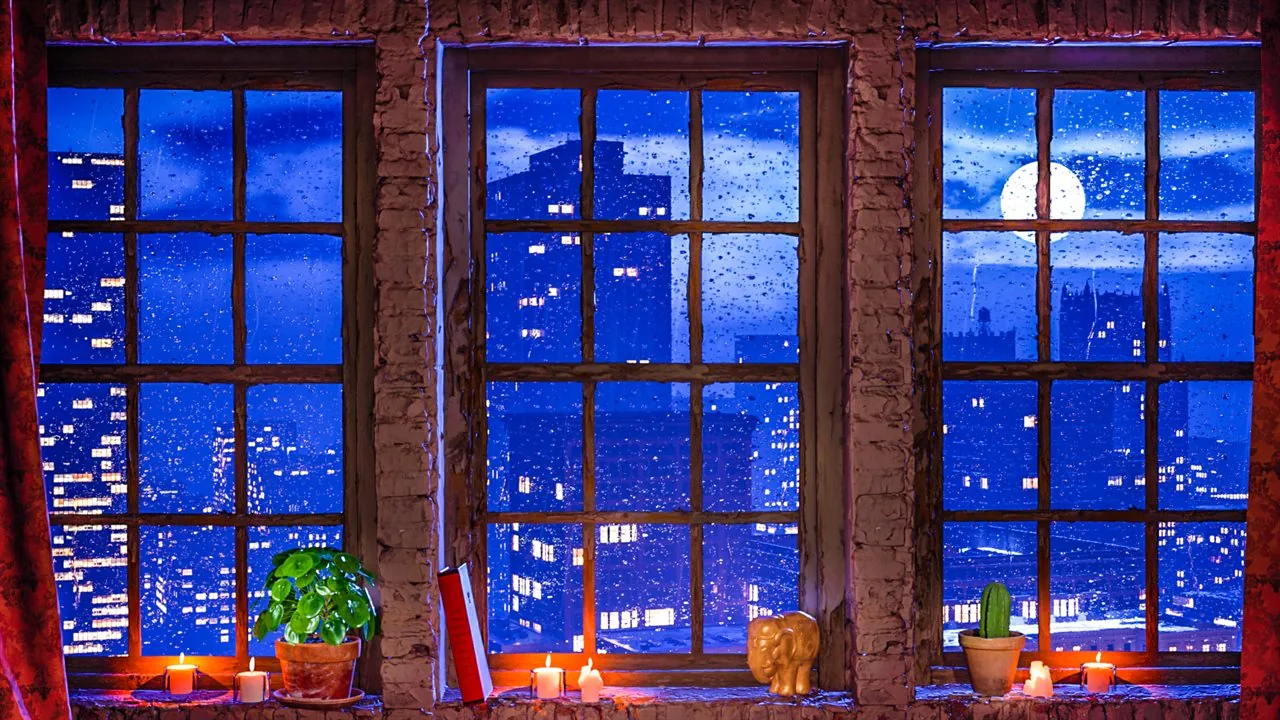
Rainy City Window keeps the urban night close to the glass, with moonlight, candles and wet reflections that make the room feel protected. It is the most intimate city option for sleep, reading and quiet TV use.
Watch on YouTube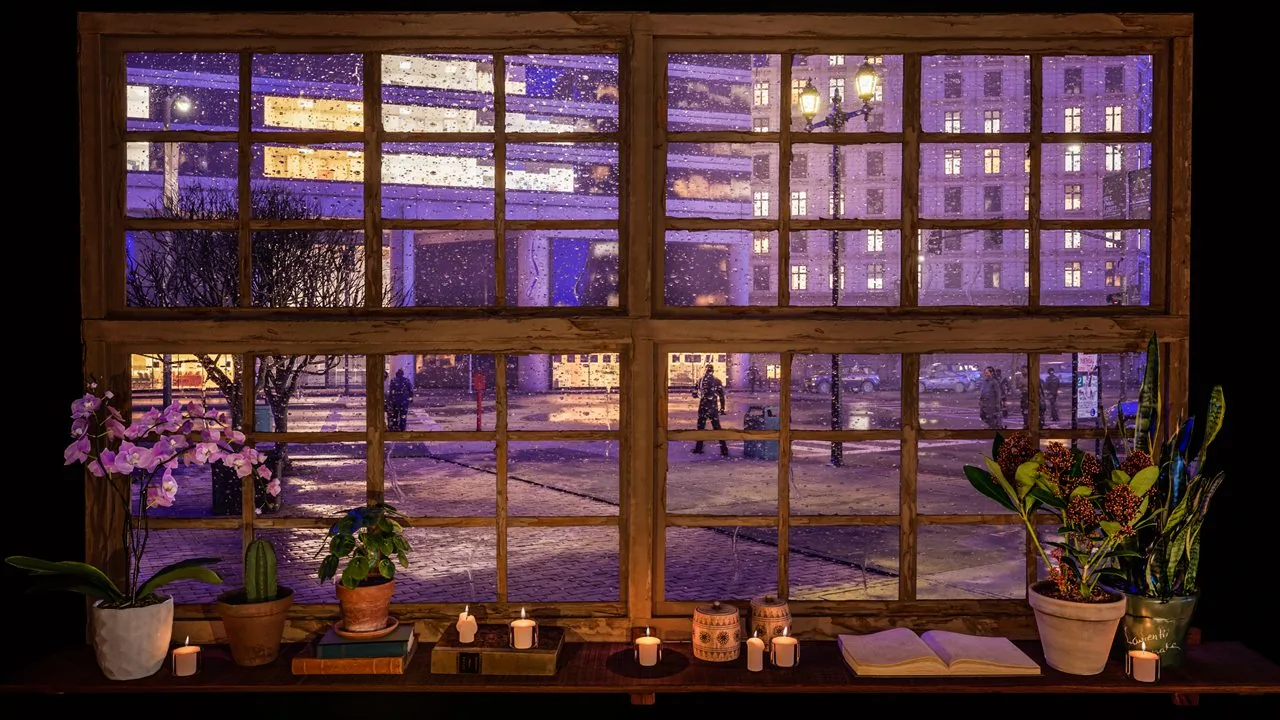
City window ambience
Quiet Rainy City Evening opens the frame to a wider street rhythm, with enough distant movement to keep the room feeling inhabited. It suits living rooms, desks and projector walls that need a little more openness.
Watch on YouTube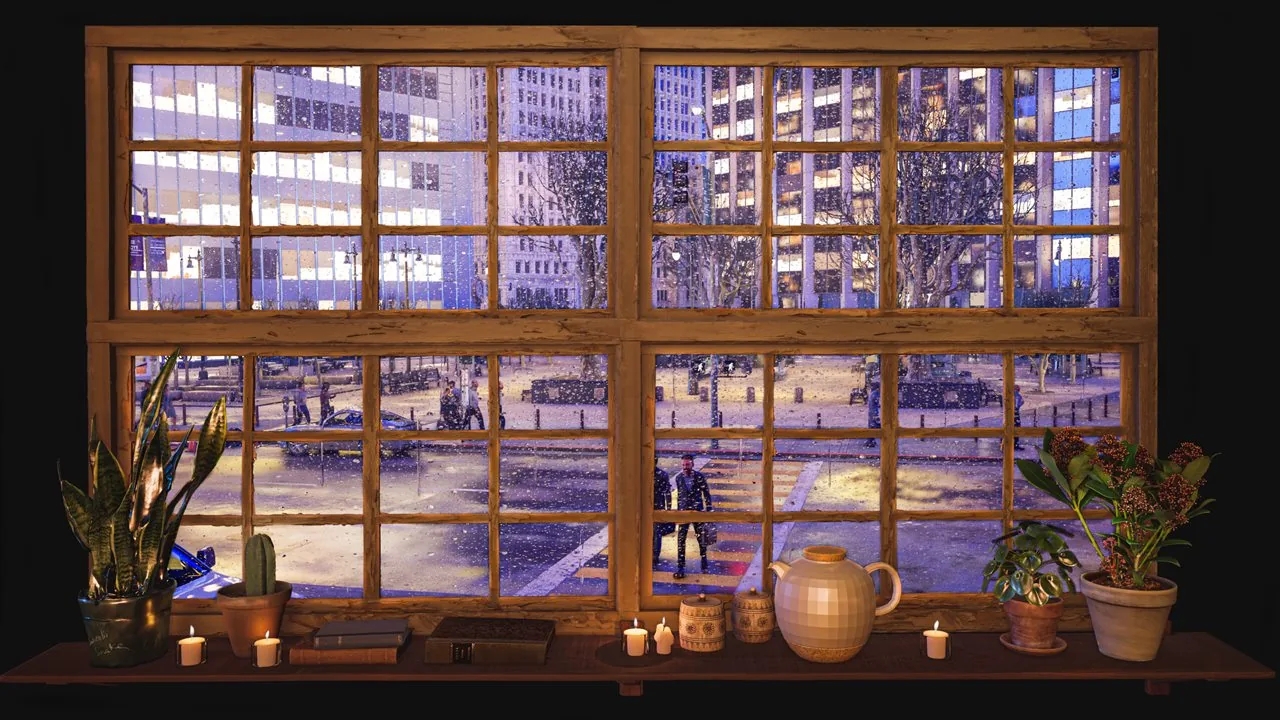
City window ambience
Rainy City Window with Candlelight pairs the outside city with warm candlelit interior cues. It is the coziest urban option for evening rooms, dinner, reading and social backgrounds.
Watch on YouTube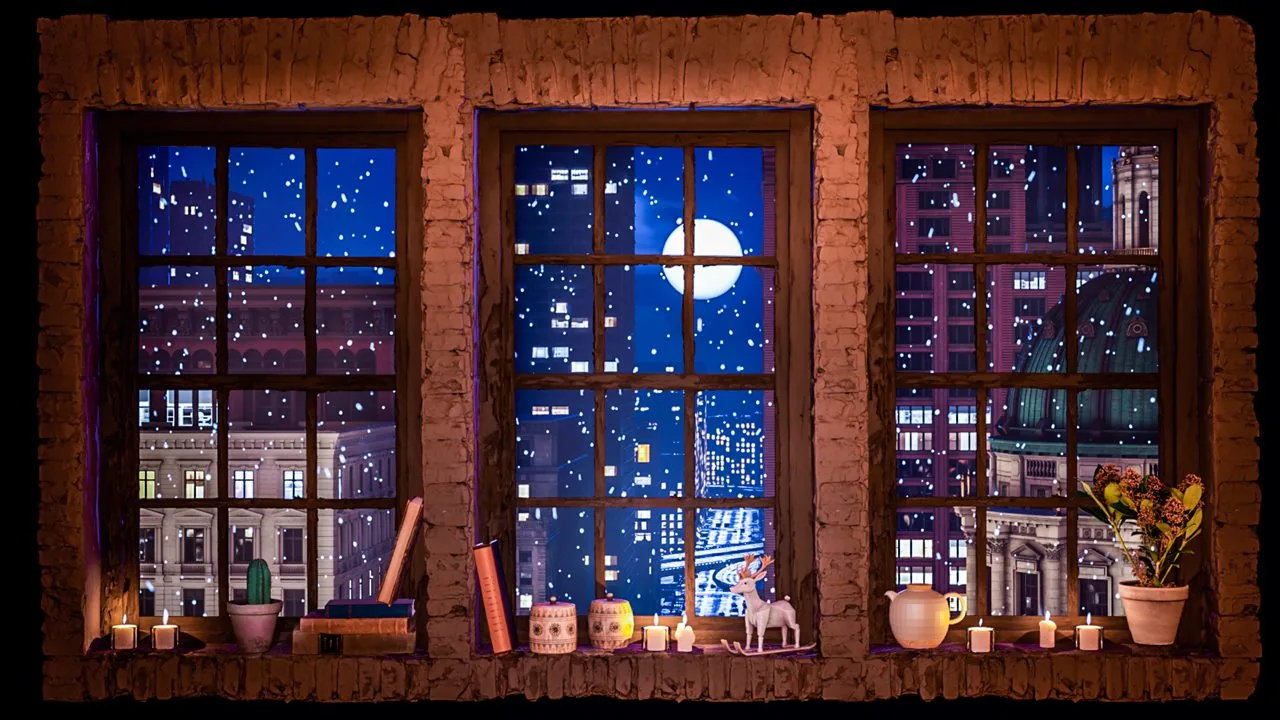
Snow ambience
Snowy City Window slows the city down with snow, candles and a quieter winter palette. Choose it when you want a softer seasonal screen that still feels urban rather than rustic.
Watch on YouTubeRoom ideas
Urban window scenes can support several kinds of interiors as long as the brightness and movement level fit the actual room use.
City ambience works naturally in living rooms because the scale of buildings, street lights and interior lamps already matches an evening social space. Use a broader rainy scene for dinner or conversation, then lower brightness until the screen sits beside the lamps instead of overpowering them.
For a bedroom, choose the darker rainy city or snowy window options and keep the volume low or muted. A sleep timer is useful because even a calm city screen remains visually active longer than a dark room.
A city window on a secondary screen can add depth to a compact workspace without introducing a strong narrative distraction. Rainy city scenes are often better than bright daytime streets because they keep contrast and movement under control.
A projector can make the city view feel architectural, especially with curtains, plants or furniture around the image. Keep the virtual window at a believable size so the urban exterior feels connected to the wall rather than stretched across the entire room.
Simple setup
A calm city screen usually depends more on restraint than on maximum image impact. Tune the display so the urban depth remains readable without becoming the brightest object in the room.
Start with a cinema or warm mode rather than a retail-style preset. City scenes often look more believable when black areas stay dark and building lights do not bloom excessively.
Rain, distant traffic and soft city tone should support the room without dominating it. In bedrooms and shared spaces, very low volume or silent playback often works best.
Warm lamps, candles and textiles usually pair better with rainy night and snowy city scenes than cool overhead lighting. Small lighting changes around the screen can make the virtual window feel more intentional.
Whether on TV or projector, the city view is more convincing when it reads like a framed opening instead of a wall-sized spectacle. Leave negative space around the image whenever possible.
If you want a larger catalog of weather-led scenes beyond the city, continue with the Rain Ambience guide .
For wall choice, screen scale and ambient-light control, use the fake window projection guide .
For a less modern and more escapist screen mood, explore the Medieval and Fantasy Ambience guide .
Frequently asked questions
Short answers for using quiet urban window scenes on TVs, monitors and projector walls.
Start with a rainy city or snowy city window because the framing stays stable and the motion remains gentle. Choose the darker close window for quieter rooms, and the broader evening street when you want a little more visible life.
It can be, especially with darker rainy scenes, low brightness and low sound. The screen still emits light, so a timer and restrained settings are important if you want the city view only during the wind-down period.
Both can work well. A TV is easier to place in bedrooms and living rooms, while a projector can make the city view feel more architectural if the wall, scale and surrounding decor are controlled carefully.
City ambience keeps a stronger sense of outside life and urban depth, while candlelight ambience focuses more directly on warm interior details. Scenes that combine rain and candlelight sit between the two, offering both shelter and city presence.
Choose your scene
Open the full video catalog or watch the official long-form scenes on YouTube to test which urban mood fits your room best.