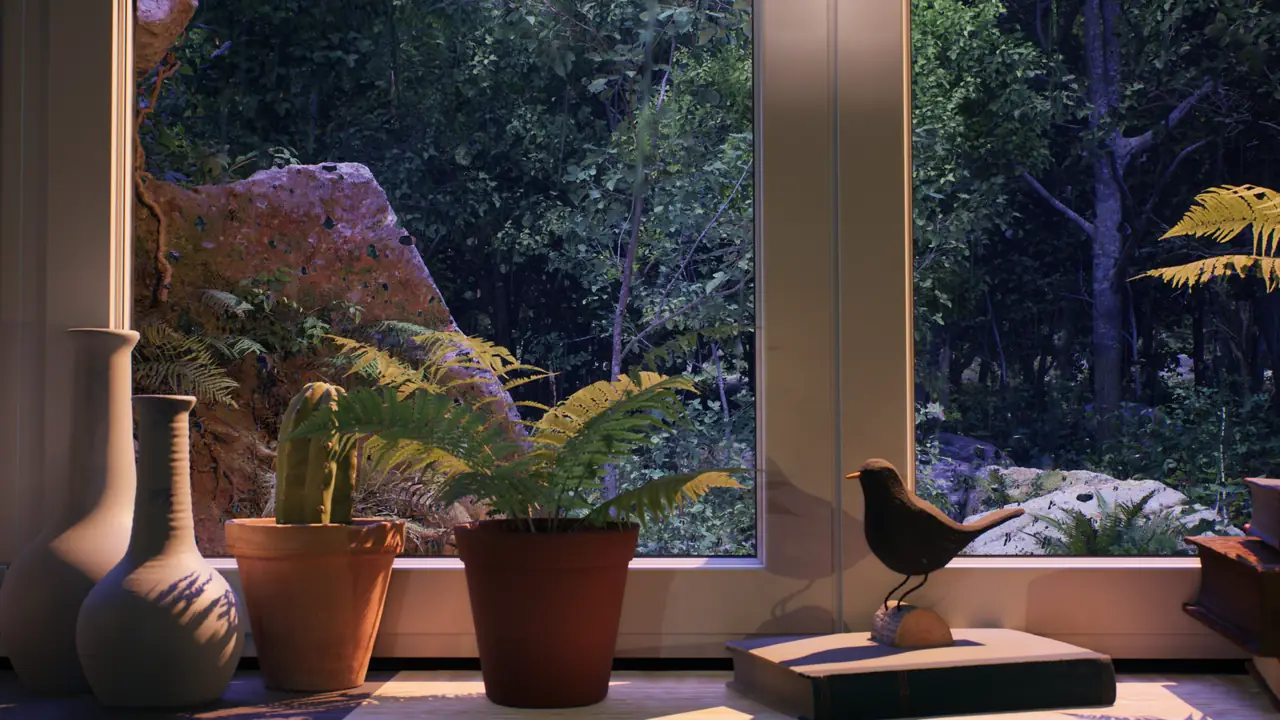
A blank wall can become more than a surface waiting for a picture. With a long-form ambience video, a projector can place rain beyond a window, a quiet garden beside a desk or an open horizon across a living room wall. The image is large enough to change the character of the space, yet it can remain gentler than a television when it is adjusted with restraint.
The aim is not to recreate a cinema at home. Projector wall ambience works best as a calm visual layer: something that supports reading, conversation, quiet work or the last part of the evening without asking everyone to watch. A projector can feel less like a device and more like light falling across the room, especially when the screen frame disappears and the image is allowed to sit naturally among the furniture.
What matters most is how the wall, image size, brightness, room light and scene work together. Even a modest projector can feel intentional when the image is straight, comfortable to look at and visually connected to the room.
Why projector wall ambience feels different from a TV
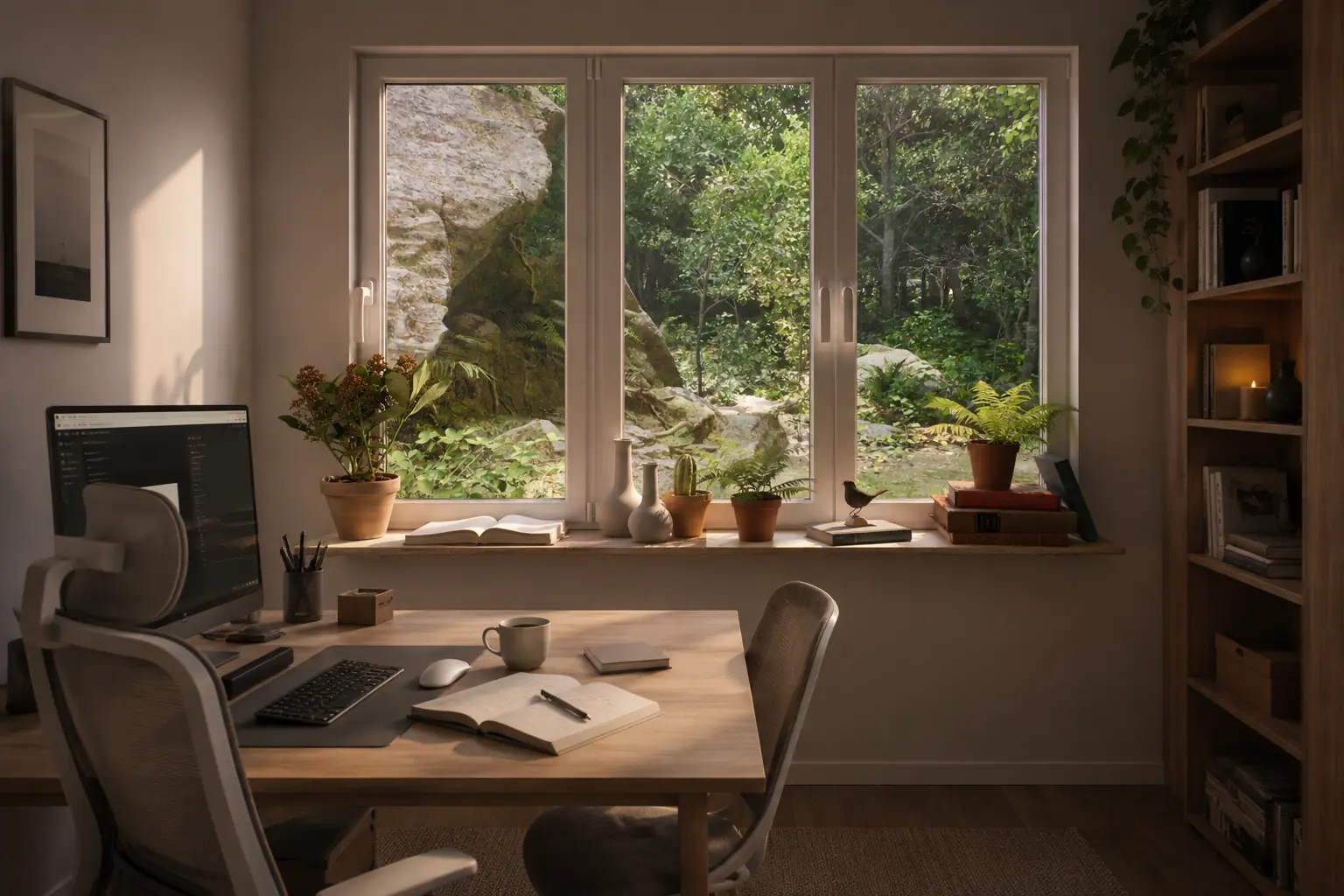
A television remains a defined object, even when it displays a beautiful view. A projection has no black frame and can feel more architectural: a patch of weather, landscape or window light placed directly on the room. Its softer edges and larger scale can create the impression of a fake window projector, an open view or a relaxing projector background rather than another screen.
That freedom also makes projector ambience easier to overdo. An image that fills every available inch of the wall, is set to maximum brightness or leans visibly to one side can turn a calm room projector into a presentation wall. For ambience, the image should support the room rather than become the main event. TVs remain simpler, brighter and easier to use in daylight; the rain ambience for TV guide explains when that more predictable display is the better choice, while the fake window setup guide covers the basic HDMI, source and YouTube steps.
Start with the wall, not the projector
The best projector wall background begins with a clean, matte and relatively uncluttered surface. White paint gives the most readable image, although it can make bright skies or snow feel stronger than expected. A warm off-white, pale gray or light neutral wall may soften the result. Heavy texture reduces detail, while glossy paint creates distracting highlights and reveals the projector beam more clearly.
Avoid projecting through frames, shelves, switches, cables or strong architectural details. A little texture can give the image character, but visual clutter breaks a window composition and makes landscapes difficult to read. A smaller projection on one calm section of wall usually looks more intentional than a giant image interrupted by furniture.
A perfect empty wall is not essential. Move a chair or side table slightly, reduce the image size and use curtains, one plant or low furniture to frame the area. Work with the room that exists instead of forcing a wall-to-wall picture into it. The broader projection guide covers throw distance, surfaces and projector types when the physical setup needs more planning.
Choose the right image size
For projector wall ambience, bigger is not automatically better. A huge image creates the visual language of cinema, gaming or a presentation. A moderate image can behave more like a window, artwork or soft background. The useful scale depends on the room, viewing distance, furniture and activity rather than the maximum size listed on the projector box.
Judge the size from the seat or area where people will actually spend time, not from the projector position. A wide landscape may suit a sofa across the room. From a bed, desk or reading chair, a smaller frame is often calmer and easier to ignore when attention moves elsewhere. Keep bright horizons and moving highlights away from the center of the working or sleeping sightline.
Use nearby furniture as a scale reference. A projected window can sit above a low cabinet; a garden view can align with a desk; a broad ocean scene can relate to the width of a sofa without filling the ceiling height. Leave some blank wall around the image. That breathing room helps the projection belong to the architecture instead of appearing pasted across it.
Brightness, contrast and room light
Projector ambience needs more control over room light than TV ambience, but the room does not have to be completely dark. Total darkness can make even a moderate image feel theatrical. Close blinds against direct sunlight, turn off strong ceiling lights and keep one or two side lamps so the projection shares the room with real light.
Start with Cinema, Movie, Standard or another restrained picture mode. Lower brightness if the projector allows it, avoid vivid color settings and reduce contrast when whites look hard or shadows disappear. If the image becomes the brightest object in the room, it will keep pulling attention. If it is too dim to hold its composition, it becomes an uncertain patch on the wall.
Warm lamps work naturally with rainy cities, cabins, candlelight and candlelit interiors. Softer neutral lamps often suit forests, ocean views and snow because they preserve cooler colors without making the room feel blue. The goal is not to match every color in the video, but to bring the projected light and the practical room lighting into the same comfortable range.
Alignment and placement
Straight alignment matters most when the scene contains a visible window frame, doorway or horizon. A crooked virtual window projector breaks the illusion immediately. Place the projector as square to the wall as the room permits and use lens shift or small physical adjustments before relying heavily on digital keystone correction, which can soften the image and reduce the usable area.
Keep the projector stable and outside the main walkway. People crossing the beam, moving shadows, fan noise and a cable trailing through the room all weaken the calm effect. Avoid doors, shelves and wall art inside the image. A high shelf, secure ceiling position or discreet side placement can work, provided ventilation remains clear and the manufacturer's installation guidance is followed.
Choosing ambience videos for a projector wall
The best ambience videos for projector use have stable framing, slow movement, gentle contrast and enough length to disappear into the background. Look for a clear composition that remains readable from across the room: a window frame, a line of trees, a lake edge or a distant horizon. Fast cuts, camera moves and sudden changes in brightness repeatedly turn the wall back into a screen.
Rainy window scenes
Rain works well because its movement is continuous, familiar and visually believable. Droplets on glass provide detail while the landscape beyond creates depth. Choose steady rain for quiet use and keep thunder or lightning for rooms where a stronger atmosphere is welcome. Browse Rain Ambience for city, forest and lake windows.
Forest and garden views
Forest and garden scenes can make a wall feel softer, sheltered and connected to natural color. They suit home offices, reading spaces and rooms with plants or wood. Bright green daylight works best when the room already has some daylight; shaded or rainy woods integrate more easily after sunset. The Forest Ambience collection offers both lighter and more enclosed views.
Ocean and lake views
Water scenes add visual distance to a small room, especially when the horizon is stable and movement remains gentle. A lake can feel contained and intimate, while an ocean view gives the wall a broader direction. Avoid very bright horizons at eye level for long sessions. Explore Ocean Ambience when a more cinematic sense of openness suits the room.
Snow and winter scenes
Snow creates slow motion and a clear seasonal mood. It works with warm lamps, pale walls and quiet winter decor, but white scenery can emit more light than expected. Reduce brightness before judging the scene. The Snow Ambience collection includes calmer winter backgrounds for evening use.
Fantasy or gothic scenes
Fantasy ruins, gothic windows and candlelit architecture can be immersive on a large wall. They are useful for themed reading, creative work or a more expressive evening room, but they carry more visual weight than a natural view. Give them a simple surrounding and slightly lower brightness so the atmosphere feels intentional rather than theatrical.
Recommended rooms and everyday uses
Bedroom
A projector for bedroom ambience works best with a darker scene, low brightness and a timer. Keep the image out of your direct line of sight from the bed if motion remains noticeable. Use it as part of a wind-down routine rather than a sleep treatment, and switch it off whenever light, sound or fan noise makes rest less comfortable.
Living room
Projector ambience in a living room can support reading, conversation, a quiet meal or background decor. The room can accept a wider image than a bedroom, especially above a low unit or opposite a sofa. Balance it with lamps and furniture so it does not automatically turn every evening into a cinema session.
Home office
Place the projection on a side wall, behind the desk or beyond the main work zone. A muted garden, forest or rainy window can provide a distant place to rest the eyes without competing with the monitor. Keep sound very low or muted and avoid high-contrast motion close to the working screen.
Reading corner
A reading corner can carry more atmosphere: rain, a lake, forest, candlelight or a gothic window all work beside books, a chair and one warm lamp. Keep moving highlights away from the page. The projection should sit beyond the book rather than flicker at the edge of every line.
Small or windowless room
In a small or windowless room, use a compact projection with a clear foreground and depth beyond it. Fake window compositions are especially useful because their frame explains the image. Do not compensate for the lack of daylight by making the wall excessively bright. The bedroom fake window guide and best fake window videos offer more scene and placement ideas.
Integrating the projection into the decor
A projection feels more believable when the room gives it context. Curtains can suggest the edge of a window, plants can connect an interior to a forest or garden, and low furniture can give the image a visual base. Books, wood, linen and other matte textures absorb light more gracefully than glossy surfaces.
Do not build an elaborate stage around the wall. One plant, a curtain or a warm lamp may be enough. Leave open space around the image, hide cables and keep the projector itself visually discreet. A projected fake window should feel as though it belongs to the room, not as though it has been prepared for a temporary demonstration.
Match the general brightness and color temperature rather than copying the video exactly. Amber light supports rainy city and candlelit scenes; softer neutral light works with forests, ocean and snow. The projected view and the real room can remain different as long as neither one visually cancels the other.
A simple projector ambience setup routine
- Choose the room activity first: reading, relaxing, working, sleeping, hosting or quiet background.
- Pick a calm wall and reduce visual clutter.
- Start with a moderate image size.
- Align the projector physically before relying on digital correction.
- Lower brightness until the image sits comfortably with the room lighting.
- Choose a long-form ambience video with stable framing and slow movement.
- Keep sound low or muted.
- Add one or two lamps so the room does not feel like a cinema.
- Use a timer if the projection runs near bedtime.
Small adjustments usually matter more than expensive gear. Test the image from the bed, sofa, desk or chair where it will actually be seen. Change one thing at a time: size, alignment, brightness, lamp position or sound. When the projection stops demanding attention, the setup is close to working.
Common mistakes to avoid
- Making the image as large as the wall allows.
- Using Vivid, Dynamic or highly saturated picture modes.
- Projecting across shelves, frames, cables or a heavily textured surface.
- Leaving the room completely dark when a soft side lamp would integrate the image.
- Choosing videos with fast cuts, moving cameras or strong changes in brightness.
- Placing the projector where people regularly cross the beam.
- Running sound loudly enough to feel like a speaker demonstration.
- Leaving menus, autoplay recommendations, captions or progress bars visible.
Most of these problems are easy to correct. Reduce the image before buying a new projector, move a lamp before repainting the room and test a calmer video before changing every picture setting. The most convincing projector wall ideas are often the least complicated.
Finding the projector wall ambience that fits your room
Projector wall ambience works best when it is restrained. The goal is not to impress the room but to make it easier to inhabit. A rainy window, forest view, ocean horizon, snowy landscape or fantasy scene can all work when the size, brightness and movement support the activity already taking place.
Explore the Projection page for practical planning, browse the full video gallery for long-form scenes, or watch Window Ambience Studio on YouTube. Try the scene at the time of day when you will use it. Let the room, not the projector's specifications, guide the final choice.
Mini FAQ
What is projector wall ambience?
It uses a projector to display slow ambience videos on a wall, creating a calm visual background, fake window or immersive room feature.
Can projector wall ambience work in small rooms?
Yes. A smaller, softer image usually works better than a wall-filling projection. Keep the brightness comfortable and choose a simple composition with clear depth.
What wall is best for projector ambience?
A clean, matte, smooth white or light neutral wall is usually easiest. Slight texture or warmer paint can work if the image remains readable, but glossy surfaces and visual clutter are distracting.
Should the room be completely dark?
Not necessarily. Controlled side lighting can make the projection feel more natural and less like a cinema. Avoid direct sunlight and strong ceiling lights across the image.
What videos work best on a projector wall?
Long-form videos with stable framing, slow movement, gentle contrast and no frequent cuts work best. Window frames, landscapes and clear horizons should remain readable from across the room.
Is projector ambience good for bedrooms?
It can support a calmer bedroom atmosphere when brightness and sound are low and a timer is used, but it is not a sleep treatment. Turn it off if light, motion or fan noise disturbs rest.
Can I use projector wall ambience without sound?
Yes. Muted video can still create a strong visual atmosphere for reading, work, conversation or quiet background use.
Explore long-form ambience scenes on the Window Ambience Studio channel.
Watch on YouTube →