
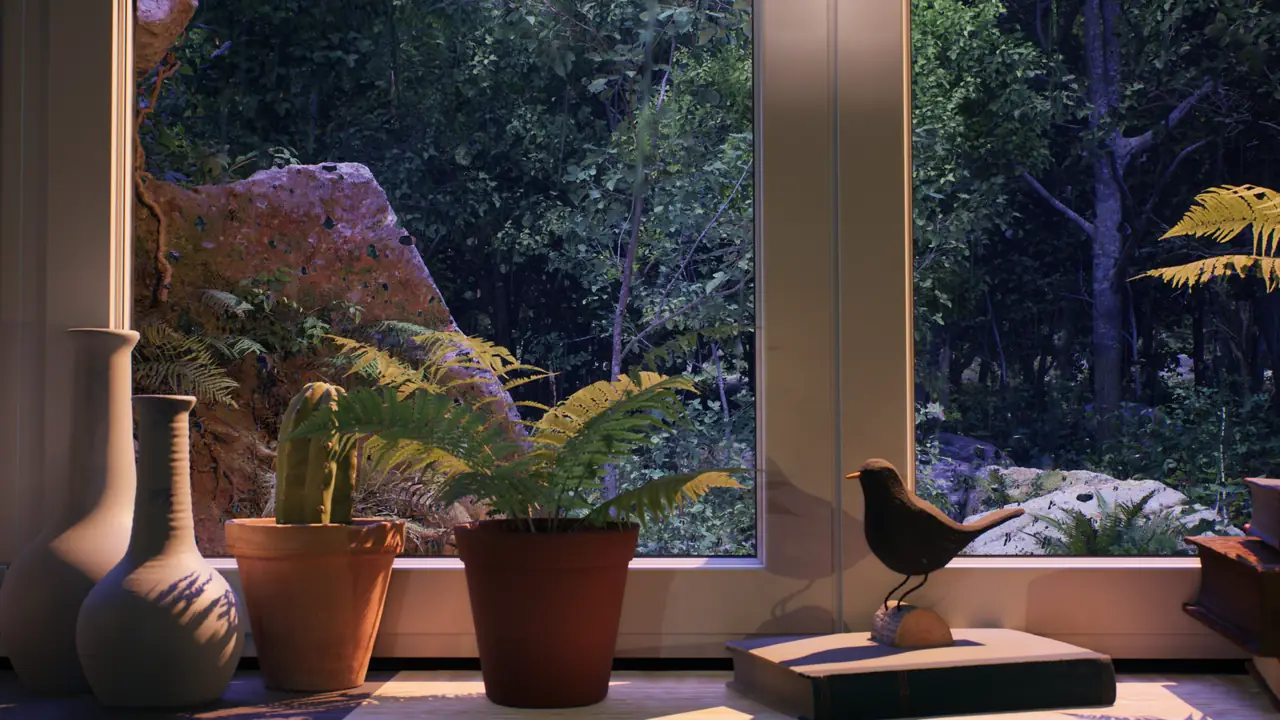
A bedroom fake window is not about turning the room into a cinema. It is about giving a wall a quiet sense of depth, softness and atmosphere. A TV, monitor or projector can display a long-form ambience video that behaves more like a view than ordinary entertainment: the camera stays still, weather moves slowly and the scene does not demand a response.
This approach can help a bedroom with no view, a compact rented room, a dark corner or a guest room feel more intentional and finished. It is especially useful when the screen would otherwise remain a black rectangle. The effect does not replace daylight or a real window, but it can give the eye a visual destination and make the room feel less closed in.
For some people, a calm virtual window can support a wind-down routine when brightness, sound and timing are handled carefully. It is not a sleep treatment. If the screen keeps you alert, reflects into the bed or remains brighter than the lamps around it, dim it or switch it off.
Why a fake window works well in a bedroom
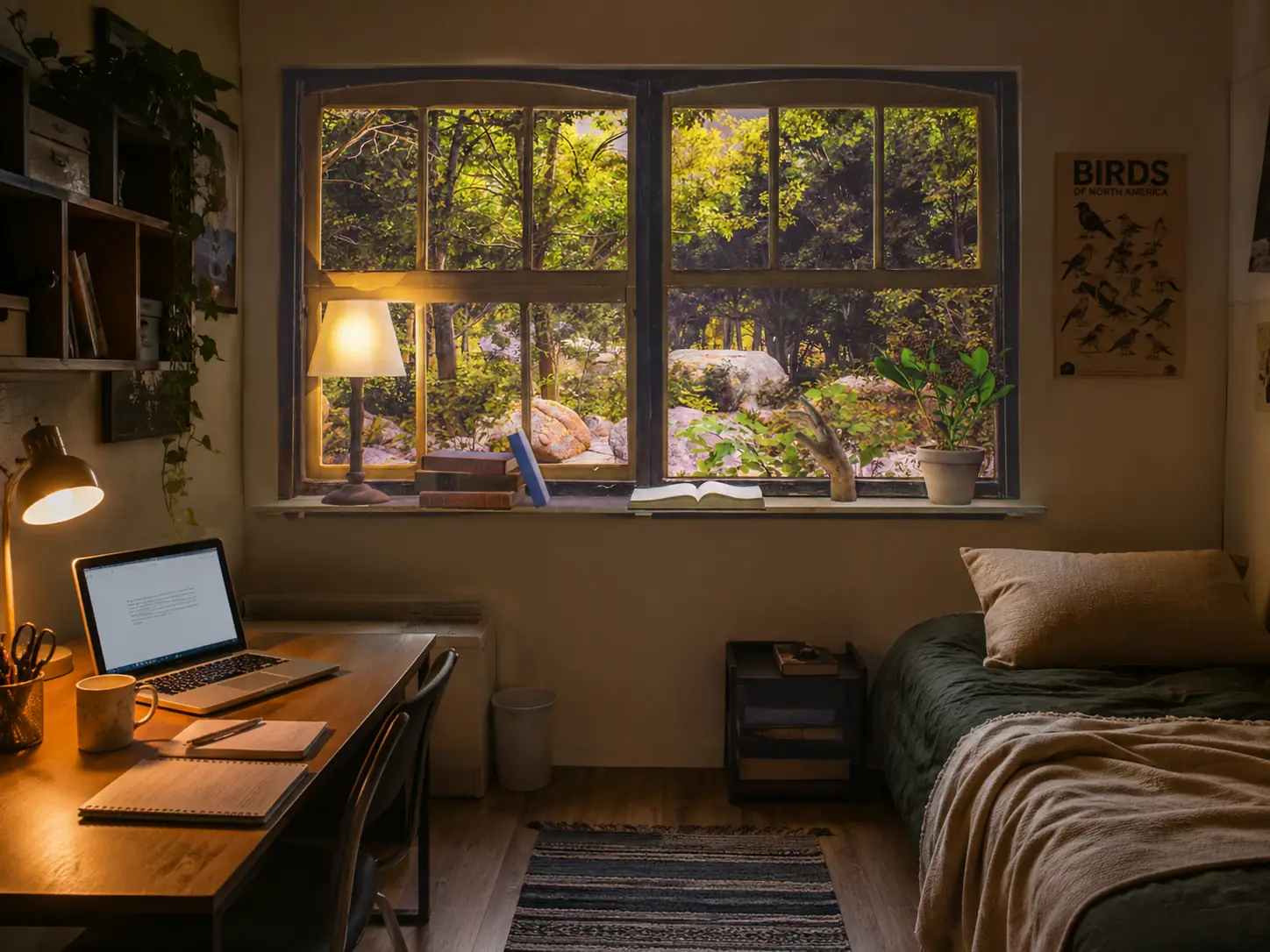
Bedrooms benefit from visual calm. A blank wall may feel unfinished, while a dark television can feel hard and technical. A slow virtual window gives the rectangle a purpose. Its frame already resembles a window, and a stable scene with a foreground, glass and a distant view creates layers that suggest depth.
Gentle movement is important. Rain crossing glass, snow passing a streetlight, branches moving outside or distant city lights keep the image alive without creating a story to follow. The effect works best when the display belongs to the room visually, with comfortable scale, restrained brightness and nearby materials that support the scene.
Perfect realism is not the goal. A believable bedroom fake window is one that feels comfortable from the bed, doorway or reading chair. A smaller, well-balanced view often works better than an oversized image designed to impress from directly in front of the screen.
Choose the mood before choosing the screen
Start with the purpose and palette of the bedroom. Decide whether the room needs warmth, openness, winter stillness, a natural view or a more cinematic evening identity. Then choose the equipment and scene that can deliver that mood without dominating the space.
Rainy window ambience
Rainy window ambience feels sheltered, familiar and easy to pair with warm lamps. It suits evening reading, slow mornings and quiet background use. Near bedtime, choose steady rain rather than loud thunder, bright lightning or strong reflections. The Rain Ambience collection includes city, forest and lake views, while the rain ambience for TV guide goes deeper into domestic settings.
Snow window ambience
Snow window ambience is visually soft and relatively still. It fits pale walls, minimal bedrooms, guest rooms and winter evenings. Snow can brighten a dark room more than expected, so reduce screen output after sunset. Snowy City Window Ambience combines a quiet exterior with warmer interior detail, and the Snow Ambience page offers setup advice.
Night city window ambience
Night city window ambience gives a modern bedroom more distance and structure. It works with dark wood, metal, neutral textiles and low amber light. Look for slow, distant traffic rather than flashing signs or constant foreground movement. Quiet Rainy City Evening Ambience is broad enough to create depth while keeping the street activity restrained.
Forest or garden window ambience
A forest or garden view brings natural color to a small or windowless bedroom. It pairs naturally with plants, wood, linen and neutral fabrics. Brighter green scenes are useful during the day; rainy or shaded forest views are easier to integrate at night. Try Rainy Forest Window Ambience or browse the Forest Ambience collection.
Candlelight ambience
Candlelit scenes create a particularly warm bedroom ambience. They suit reading corners, winter setups and rooms with terracotta, brown or deep red accents. Keep the display dim and use one or two warm side lamps instead of a strong ceiling light. The Candlelight Ambience page brings together scenes built around candles, amber lamps and warm interior light.
Fantasy, gothic or atmospheric windows
A gothic castle, ruins or a more dramatic fantasy window can give a bedroom a deliberate identity. These scenes are better for reading, gaming, creative evenings or themed decor than for a strict sleep routine. Keep the surrounding room simple so the image feels elegant rather than staged. Rainy Gothic Castle Window Ambience is the most expressive window view in the current catalog.
TV, monitor or projector: choosing the right setup
TV as a fake bedroom window
Using a TV as a fake bedroom window is the easiest daily option. A wall-mounted screen or a TV on a simple low unit has predictable brightness and sharpness, starts quickly and works well with long-form videos. Use full-screen playback, hide menus and notifications, and choose calm picture settings so the display reads as part of the wall rather than as a program waiting to begin.
Monitor as a small virtual window
A monitor can become a small virtual window for a bedroom desk, dresser or side wall. It is useful in rented rooms where drilling or permanent installation is not possible. Keep it out of your direct line of sight from the bed if light is distracting. At a moderate size, it can act as a quiet visual accent rather than the main feature of the room.
Projector fake window
A fake window projector creates a softer, frame-free image, but it depends more on room light, wall texture, throw distance and alignment. Do not make the window enormous simply because the projector allows it. Choose a believable scale, keep the beam away from the bed and main walkway, and use the projection guide to plan the wall and placement.
Bedroom settings that matter more than equipment
Brightness
Start with Cinema, Filmmaker, Standard or a restrained custom mode, then lower brightness until the screen feels related to the nearest lamp. Avoid Vivid or Dynamic modes. Keep enough shadow detail to see the frame and view; a dark scene that loses all detail becomes a black rectangle again.
Sound
Audio should behave like distant ambience, not a speaker demonstration. Rain, wind, room tone or city sound should remain behind reading and conversation. Silence is completely valid for ambient videos in bedrooms, especially when the visual alone provides enough atmosphere. If the practical setup is the confusing part, the fake window setup guide explains TVs, HDMI, YouTube and projectors in plain language.
Placement
Place the display where a window could plausibly exist: above a low unit, on a side wall, near curtains or opposite a chair. Avoid a bright image directly in the sleeping sightline if it disturbs rest. Judge the result from the bed and doorway, not only from a position directly in front of the screen.
Playback control
Use a sleep timer, a prepared playlist or one long video. Check autoplay before settling in so a calm scene is not followed by a bright recommendation. Hide controls, captions, progress bars and notifications once playback begins, and follow the display manufacturer's advice for long sessions.
How to make the fake window feel part of the bedroom
Curtains beside the screen can suggest an architectural opening without building a false frame. A low unit, narrow shelf or clean wall mount gives the image a visual base. Keep cables, streaming boxes and technical objects discreet, and reduce reflections from lamps placed directly opposite the display.
Use warm side lamps instead of relying on the ceiling light. Plants, books, wood, linen, blankets and matte surfaces can connect the real room to the virtual view. Match the general color temperature rather than copying every color on screen: warm light suits candlelit interiors and rainy cities, while neutral light works with forests and snow.
Restraint matters. One plant, a curtain and a textured blanket may be enough. Too many themed props make the setup feel like a display. Leave empty space around the screen so the fake window can recede into the room.
Fake window ideas by bedroom type
Small bedroom
Use a moderate screen size, a simple composition and soft side lighting. Forest, rain and quiet lake scenes create depth without filling the wall with detail.
Windowless bedroom
Choose a view with a clear foreground and distance beyond it. A virtual window cannot replace daylight or ventilation, but it can make a windowless bedroom feel less closed in by giving one wall a sense of depth and visual direction. The windowless room guide combines screens with lighting, mirrors, color and layout.
Rented bedroom
Use a monitor on furniture, a freestanding TV or a compact projector with no permanent construction. Cable covers, a simple stand and nearby curtains can create a finished result that remains easy to remove.
Guest bedroom
Choose broadly comfortable scenes such as soft rain, snow, a garden, lake or candlelit interior. Avoid intense fantasy or highly personal color schemes unless they are part of the room's intended identity.
Reading bedroom
Rain, forest, candlelight, a quiet lake or a gothic library mood can support a reading corner. Place the screen beyond the book rather than beside it so movement and reflections do not compete with the page.
Modern apartment bedroom
Night city, rainy urban windows, minimal snow and darker lake scenes suit contemporary furniture and a restrained palette. Reduce motion smoothing and saturation so distant lights stay subtle.
A simple bedroom fake window routine
- Choose the mood first: rain, snow, city, forest, candlelight or fantasy.
- Start playback before dimming the room.
- Lower brightness until the screen matches the nearest lamp.
- Keep sound very low or muted.
- Hide controls, captions and notifications.
- Set a timer if using the screen near bedtime.
- Judge the setup from the bed, chair or doorway, not directly in front of the screen.
Change one element at a time. A familiar screen, a stable long-form video and balanced room light usually matter more than specialized equipment. The best test is whether you stop noticing the device and simply enjoy having a quiet view in the room.
Finding the right fake window for your bedroom
The best bedroom fake window is not necessarily the most spectacular video. It is the one that makes the room easier to inhabit. Some bedrooms need warmth, some need depth, some need stillness and others benefit from a more cinematic evening mood.
Browse the Window Ambience Studio video gallery or compare rain, snow, candlelight, forest, ocean and fantasy scenes in the fake window video guide. Try several views at the actual time of day you plan to use them; choose based on how the scene feels in the room, not on how impressive the thumbnail looks.
Mini FAQ
Can I create a fake window in a bedroom?
Yes. A TV, monitor or projector can display a slow ambience video to create the feeling of a calm view. Stable framing, restrained brightness and a believable position help the screen feel connected to the room.
What is the best fake window idea for a bedroom?
It depends on the room. Rain feels cozy, snow is quiet and visually soft, city views suit modern interiors, forest or garden views feel natural, and candlelit scenes add warmth.
Can I use a TV as a fake window in a bedroom?
Yes. Use a stable long-form video, lower the brightness, hide menus and notifications, and place the TV where it feels visually connected to the furniture and lighting.
Is a projector better than a TV for a bedroom fake window?
Not always. A projector can feel softer and remove the visible screen frame, but it needs more light control, throw distance and careful alignment. A TV is easier, brighter and more predictable for daily use.
Are fake window videos good for sleep?
They can support a calm evening routine for some people when brightness and sound are low and a timer is used, but they are not a sleep treatment. Turn the screen off if its light or sound makes rest less comfortable.
What scenes work best in a windowless bedroom?
Scenes with depth and gentle movement work well: rain on glass, snow beyond a window, a calm forest or lake, distant city lights or a warm candlelit interior. They do not replace daylight, but they can give the wall a visual destination.
Explore long-form ambience scenes on the Window Ambience Studio channel.
Watch on YouTube →