
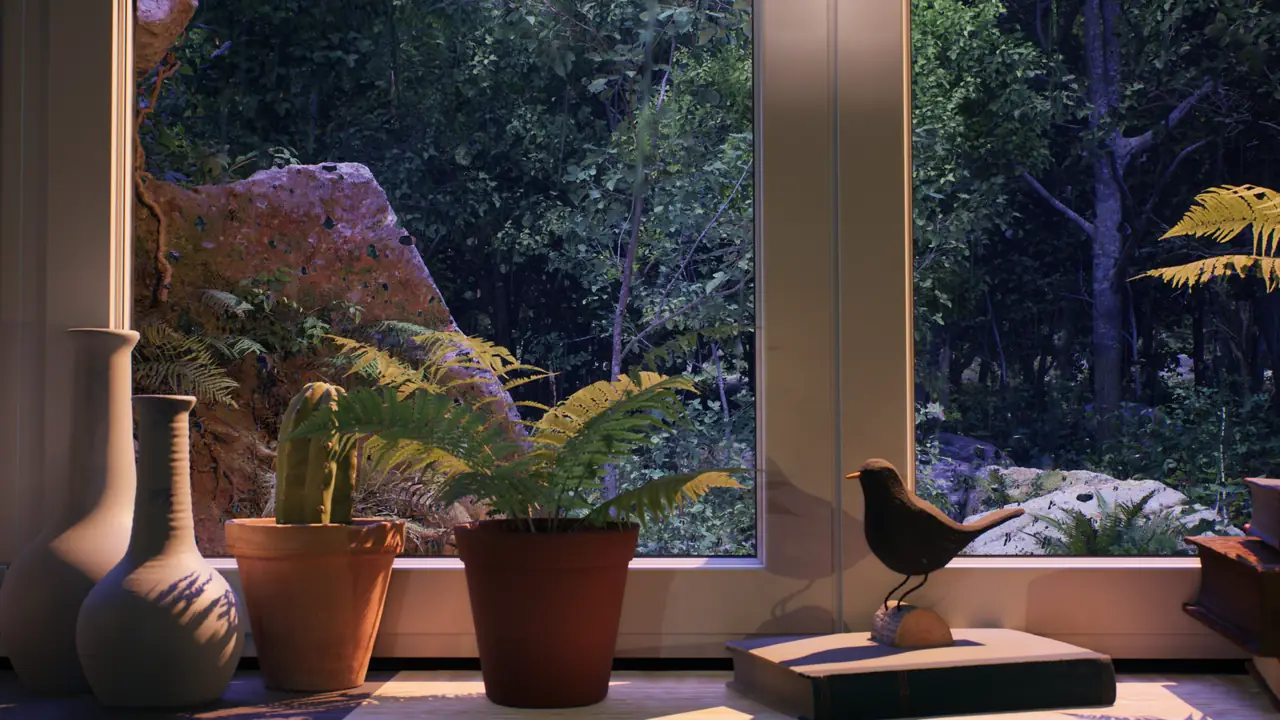
The best ambience videos for TV backgrounds do something quieter than ordinary entertainment. They give the screen a visual role in the room without asking everyone to follow a plot, wait for a reveal or keep up with rapid cuts. A rainy window can soften an evening, a forest view can open a work corner, and a snowy city can add warmth to a winter room.
That does not mean every long video works as an ambient background for TV. A useful scene needs enough movement to feel alive, but not so much that it continually pulls attention away from reading, conversation, rest or focused work. It also needs stable light, coherent sound and a composition that still looks comfortable after the first few minutes.
This guide explains how to compare cozy TV background videos, choose a scene for a particular use, browse every active Window Ambience Studio video, and adjust the screen so it behaves more like a calm virtual window than a bright media screen.
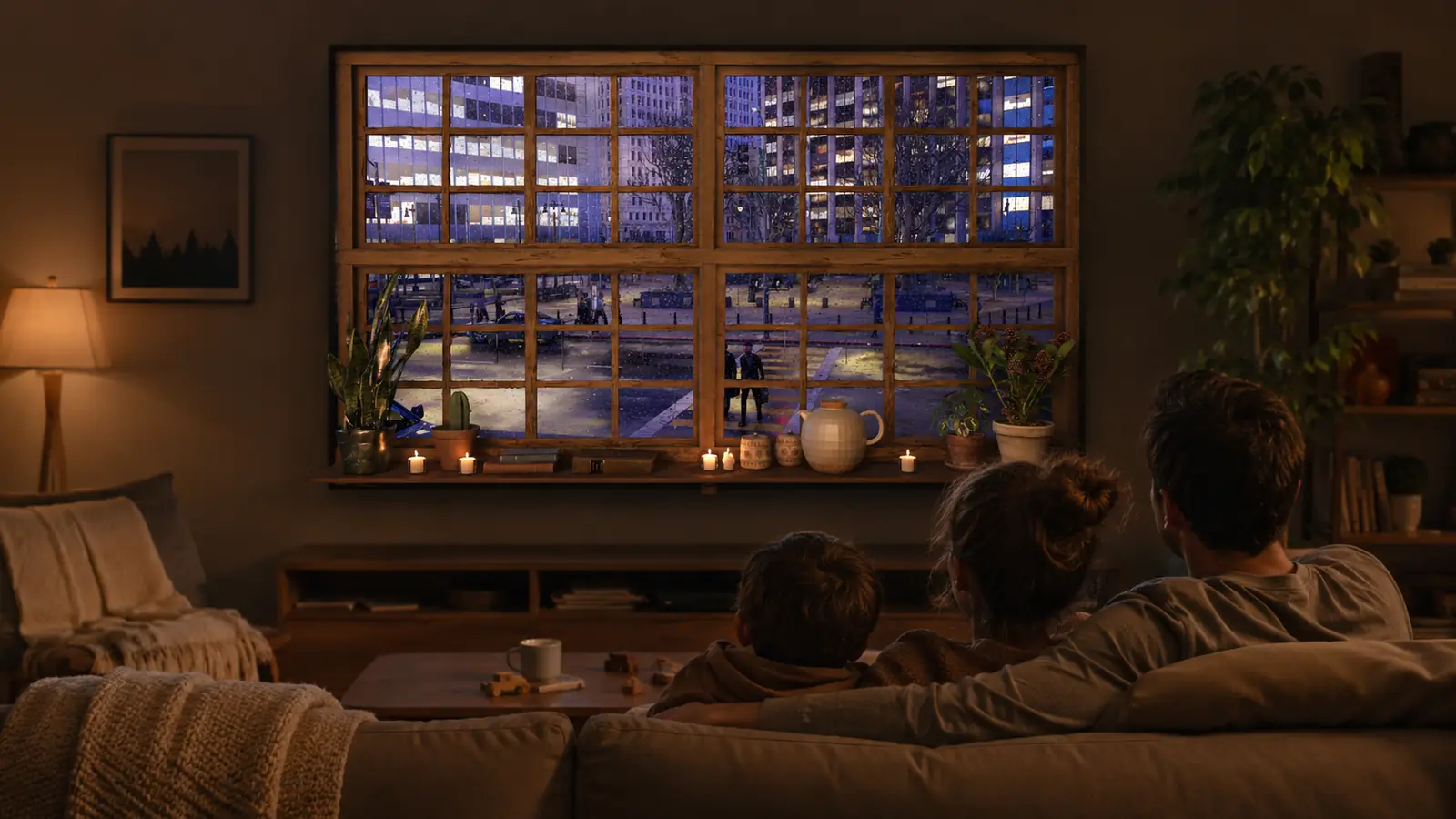
Why ambience videos work better than screensavers and background channels
A screensaver is usually designed to protect, decorate or demonstrate a display. It may cycle through photographs, abstract shapes or short animations, but it rarely creates a sustained sense of place. An ambience video can hold one coherent environment for a long period: the same window, the same weather, the same room and the same restrained pace. That continuity helps the screen settle into the interior.
General background channels can be useful, yet many are programmed like television. They introduce titles, logos, scene changes, hosts, recommendations or advertising. Those interruptions are reasonable for a channel, but they weaken a decorative background. Long-form ambience is more predictable. Once you choose a scene, the mood can remain stable through a meal, reading session or quiet afternoon.
The window format is especially effective because it gives the image an architectural logic. The viewer understands the frame as an opening toward rain, trees, water or city light. Interior objects, curtains and reflections can strengthen that illusion. Even when nobody believes the TV is a real window, the composition feels easier to live with than an unrelated image filling the entire panel.
Ambience also gives you control. You can choose silence, low environmental sound or a separate music source. You can select a dark scene for bedtime, a bright forest for daytime concentration or a richer fantasy view for a themed room. A screensaver offers decoration; a carefully selected ambience video offers a consistent room mood.
What makes a good ambience video for TV
Long duration and visual continuity
Duration matters because restarting, searching or changing scenes breaks the effect. For background use, a long video or a well-made playlist is usually more practical than a short loop. Continuity matters just as much: sudden cuts, large camera moves, hard transitions and visible loop points can make a calm scene feel like regular programming again.
Slow movement without a frozen image
The strongest TV ambience has motion that can be noticed without being monitored. Rain trails, distant traffic, leaves, mist, water, snowfall and candlelight all provide small changes. The scene should not look frozen, but its movement should remain secondary to whatever is happening in the room.
Sound that supports rather than dominates
Environmental audio can make a scene convincing, particularly rain, birds, thunder, ocean or restrained city sound. The best level is often lower than expected. You should be able to speak, read or work without feeling that the soundtrack is asking for attention. Silence is also valid when the TV is being used only as visual decor.
Composition that suits a wide screen
A convincing fake window TV background needs stable framing and useful depth. Foreground objects can connect the virtual scene with the real room, while a readable middle distance gives the eye somewhere to rest. Very wide panoramas may look impressive but can feel disconnected on a modest screen. A contained window view often integrates more naturally.
Light and color that match the room
Choose a video whose dominant brightness and color temperature fit the lamps, walls and time of day. A bright green forest can support a daytime office, while a blue rainy city works better in a dim evening interior. Warm candles or candlelight details can connect with amber lamps, wood and textiles without requiring the whole room to follow a theme.
The best types of TV background ambience by use
Rain for sleep, reading and inward evenings
Rain is one of the most flexible choices because it creates continuous motion and familiar sound without a narrative. Dark city rain can support an evening routine, while a rainy forest or lake feels more private and natural. For sleep, choose the least contrasty scene, lower the volume and use the TV timer rather than leaving a bright display on all night.
Forest and nature for work and calm daytime rooms
Forest views bring green tones, natural depth and a sense of outdoor distance to rooms with limited views. They are well suited to desks, reading corners and daytime living spaces. Birds and occasional thunder can add presence, but a quieter rainy forest may work better when concentration matters.
Snow and candlelit warmth for cozy evenings
Snow reduces visual noise and creates a slower seasonal rhythm. Pair it with warm furniture, soft lamps or candlelit details, and the TV becomes a gentle winter focal point. This type of cozy TV background is particularly effective during dinner, reading or a quiet gathering because it feels decorative without becoming static.
City windows for modern interiors
City scenes suit rooms with contemporary furniture, evening light and an urban palette. The key is restraint: distant pedestrians, reflections and slow traffic create life, while fast vehicles, flashing signs or frequent camera changes create distraction. A stable rainy city window can feel active enough for a living room yet calm enough for conversation.
Medieval and cinematic scenes for a stronger identity
Gothic windows, ruins, caves and misty water produce a more deliberate mood. They work best when the room already supports books, darker materials, fantasy objects or dramatic lighting. In a neutral space they may become the main attraction, which can be useful for an event or themed evening but less suitable for everyday background use.
Window Ambience Studio videos: the complete TV background guide
The current Window Ambience Studio catalog contains ten long-form scenes. The groups below make comparison easier, but several videos fit more than one use. You can also see all ambience videos in the gallery, where the catalog can be browsed by rain, city, nature, snow, fantasy, projection and relaxation.
Rain and city window backgrounds
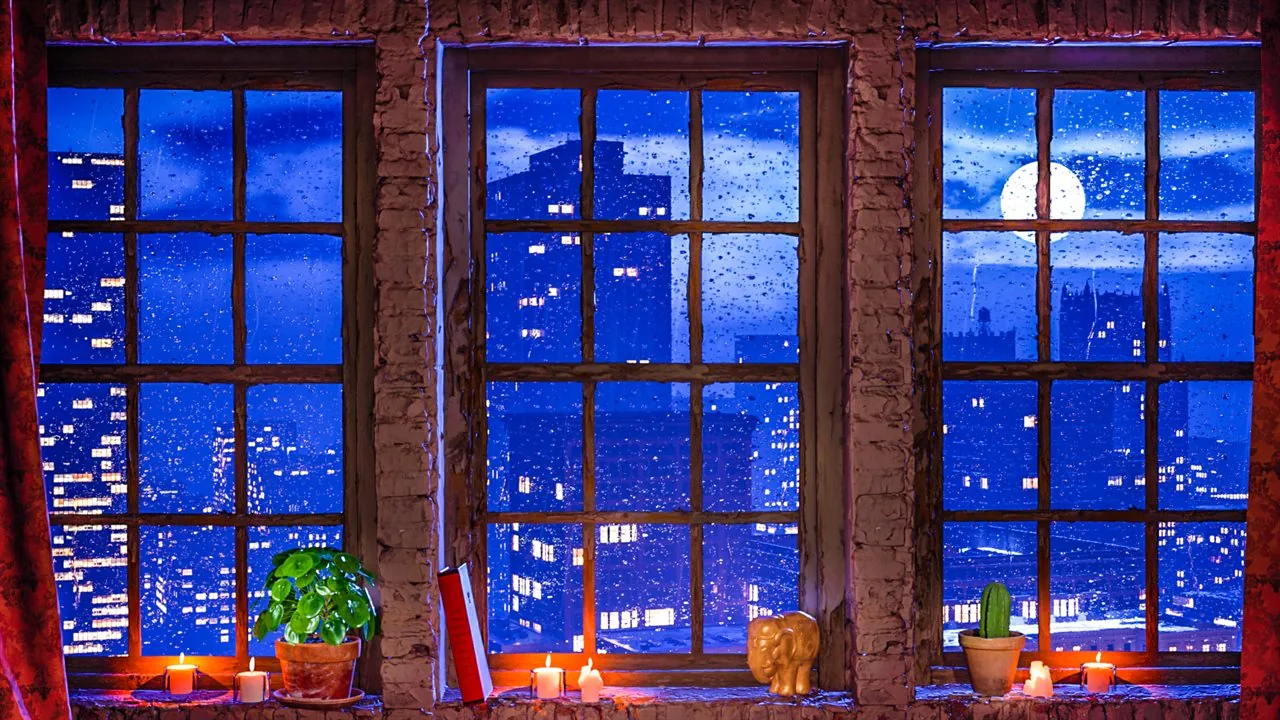
Rainy City Window Ambience is a balanced starting point for a living room, bedroom or fake window setup. Moonlight, candle details and wet reflections give the scene depth without excessive traffic. It suits low evening light and viewers who want classic rain ambience. Watch Rainy City Window Ambience on YouTube.
Rainy City Window with Candlelight Ambience brings together street movement, rain and warmer interior objects. It works well for a cozy TV background during dinner or a relaxed evening, especially in rooms with amber lamps or wood tones. Watch Rainy City Window with Candlelight Ambience on YouTube.
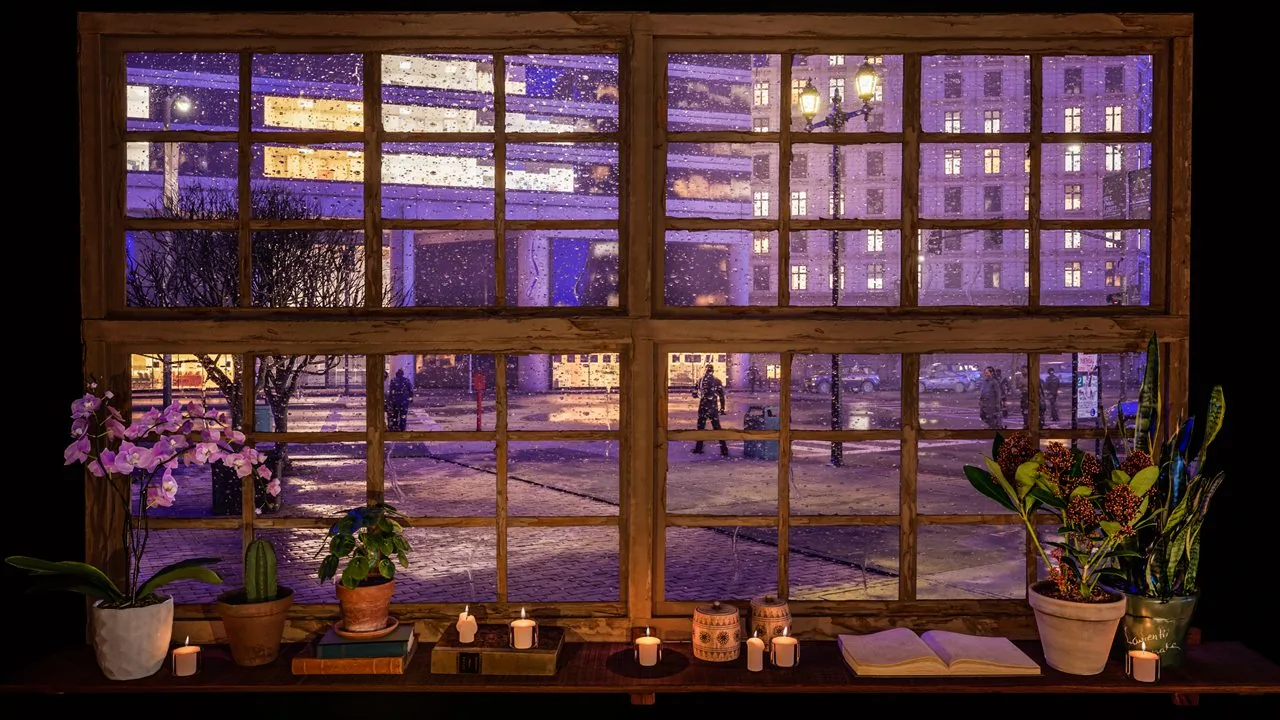
Quiet Rainy City Evening Ambience uses a broader city composition with pedestrians, street movement and evening light. Choose it when you want a little more life than a closed interior window while keeping a stable long-form background. Watch Quiet Rainy City Evening Ambience on YouTube.
Forest and lake window backgrounds
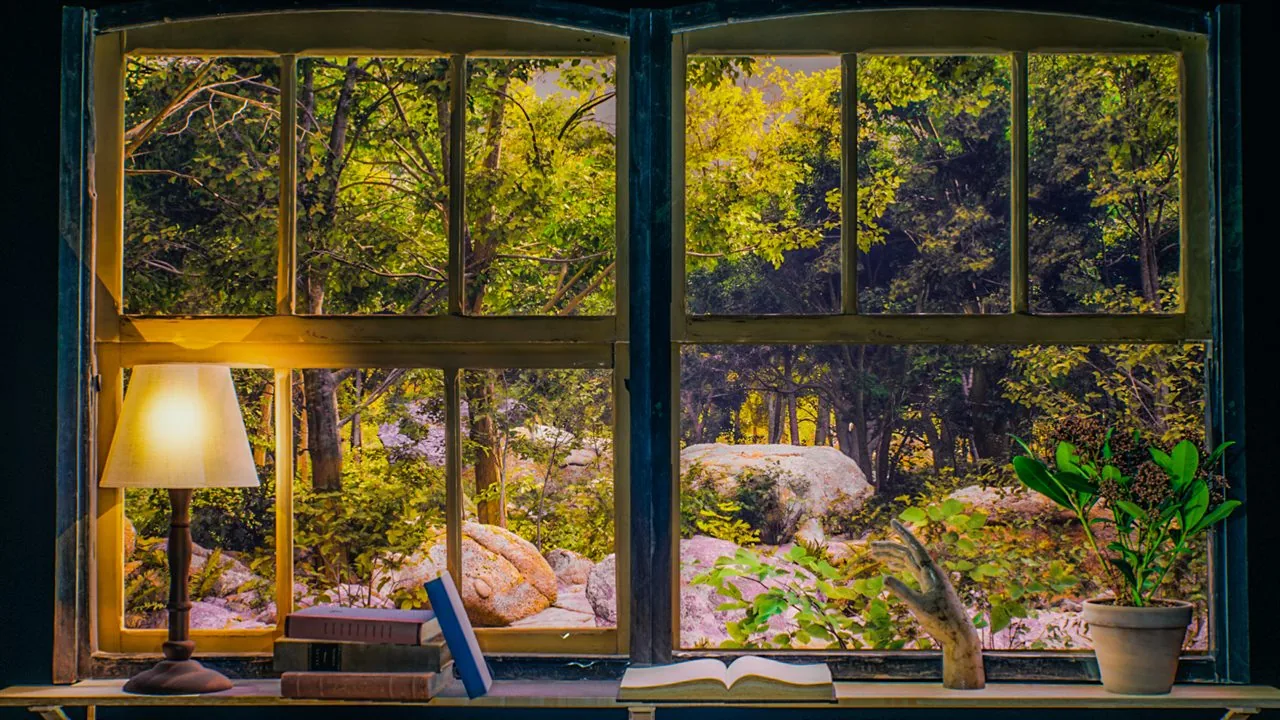
Forest Window Ambience with Birds & Thunder is the brightest natural scene in the catalog. Green scenery, indoor objects, birds and distant thunder make it suitable for study, reading and daytime rooms that need a visual connection to nature. Watch Forest Window Ambience with Birds & Thunder on YouTube.
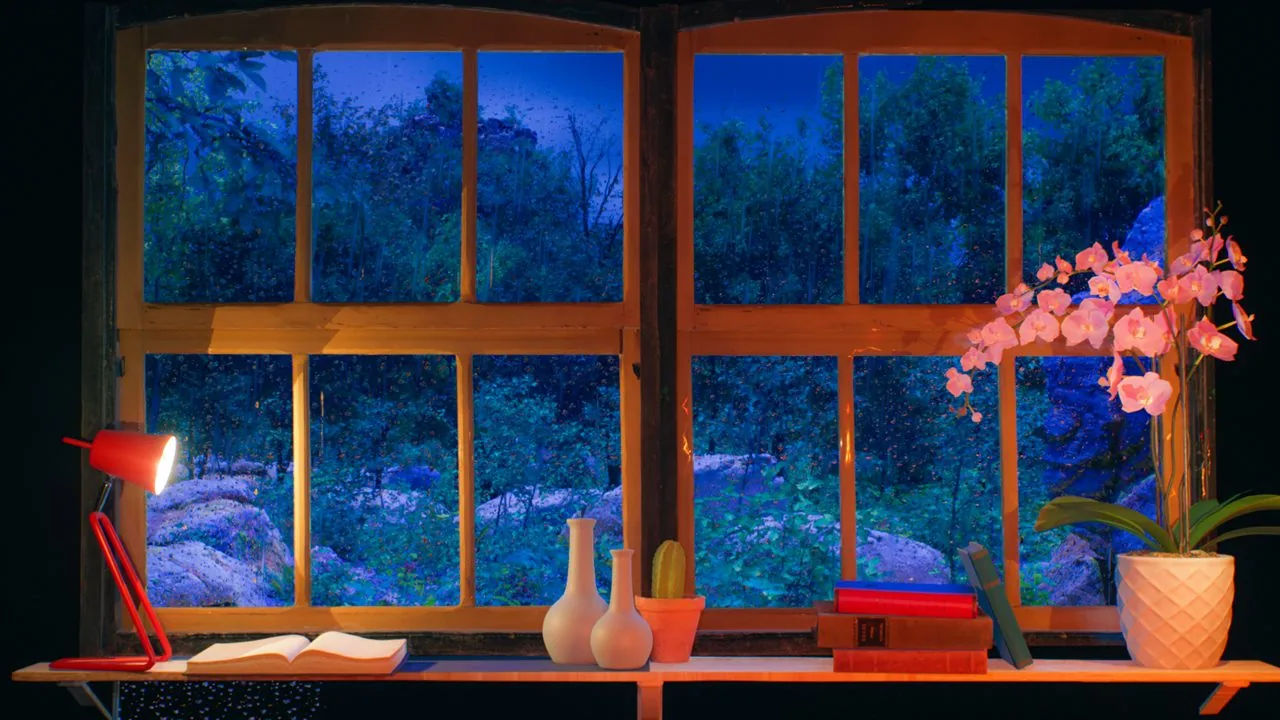
Rainy Forest Window Ambience is more enclosed and evening-oriented. Its blue forest, warm interior lighting, books and plants make it a good choice for a reading corner or calm bedroom where a bright green daytime view would feel too active. Watch Rainy Forest Window Ambience on YouTube.
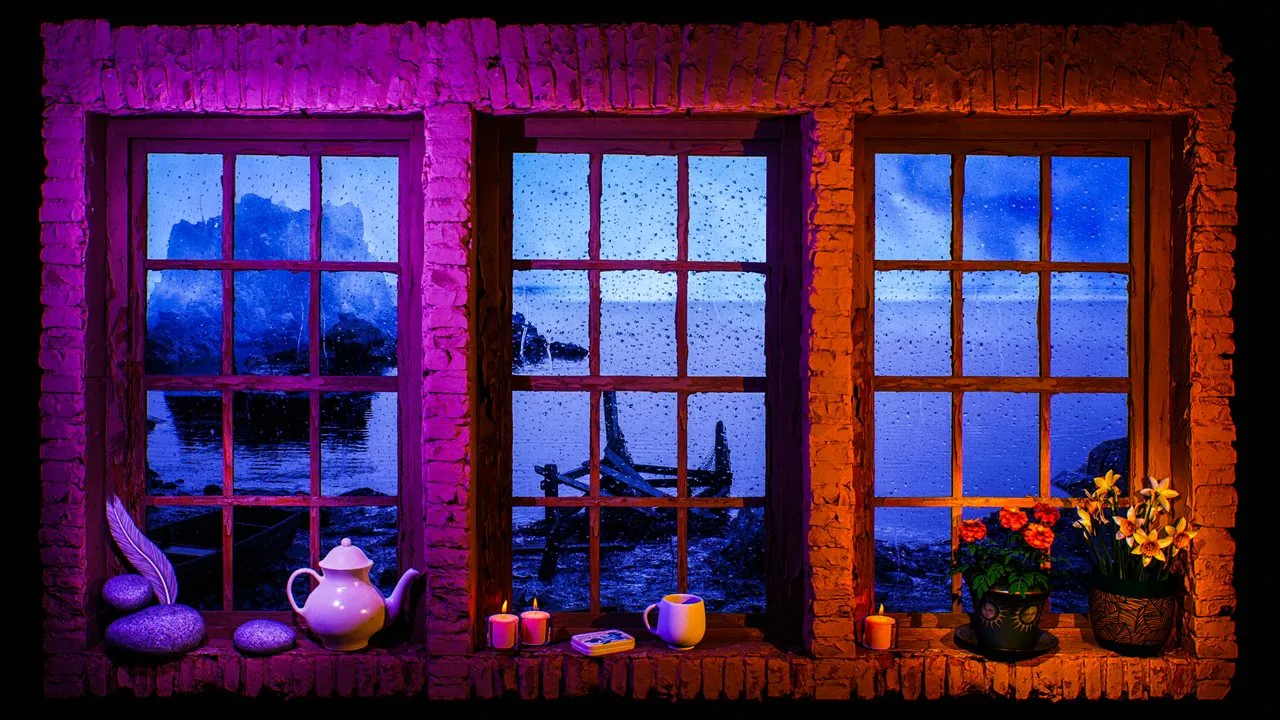
Rainy Lake Cabin Window Ambience offers a contained lake composition with rain and two-tone lighting. It is particularly useful for projector-like fake window effects, but its clear frame also works on a TV in a bedroom or quiet lounge. Watch Rainy Lake Cabin Window Ambience on YouTube.
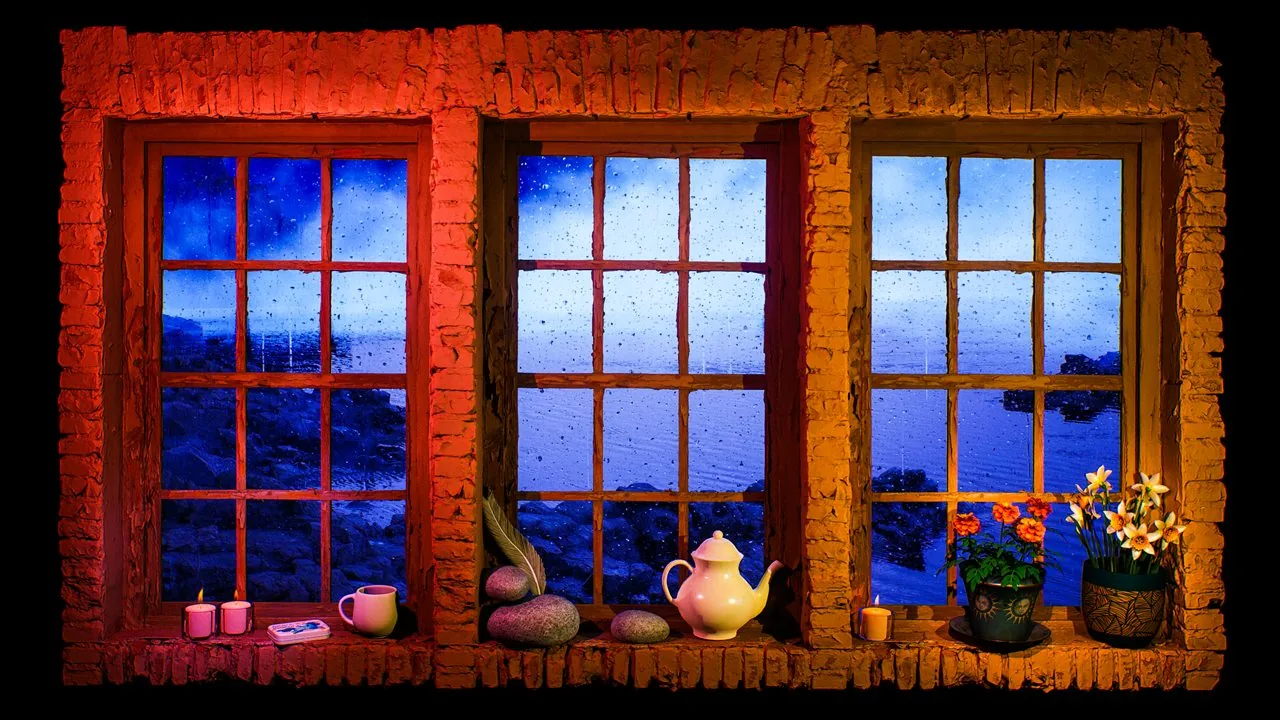
Cozy Rainy Lake Window Ambience has a stronger red palette and more cinematic floral decor. Use it when the screen can contribute a visible color accent to the room rather than disappearing into a neutral background. Watch Cozy Rainy Lake Window Ambience on YouTube.
Snow, fantasy and cinematic backgrounds
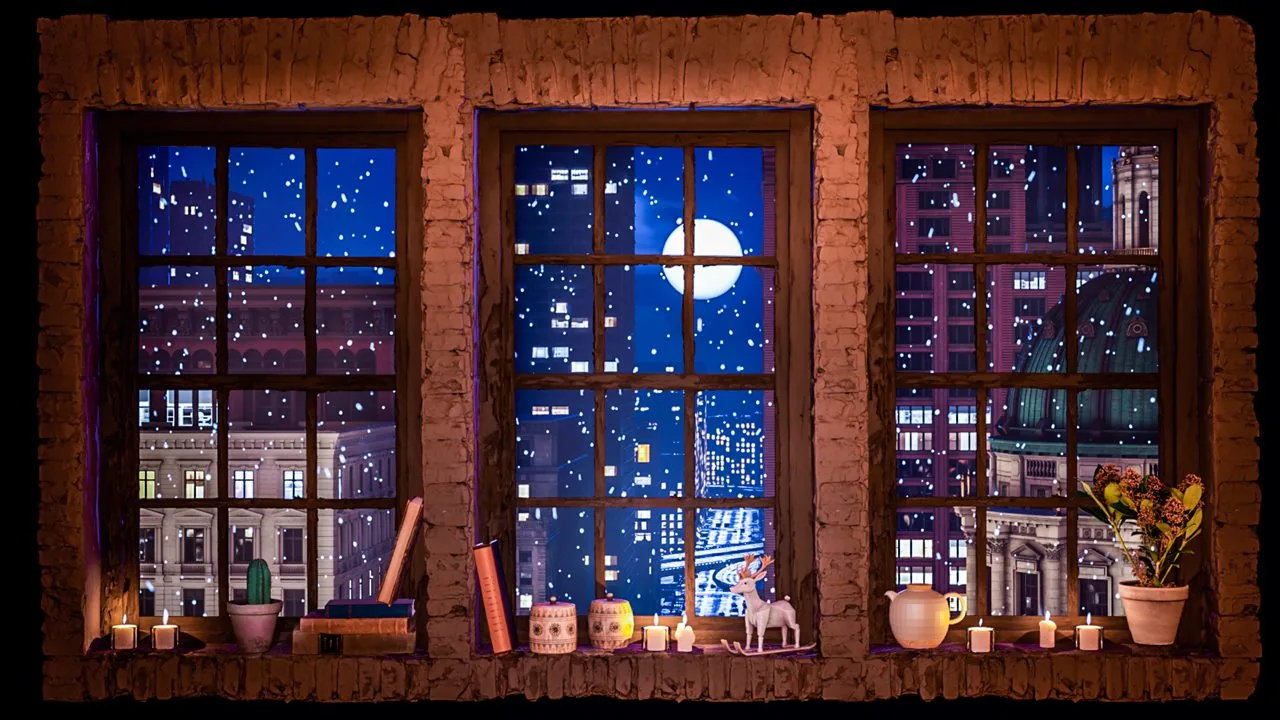
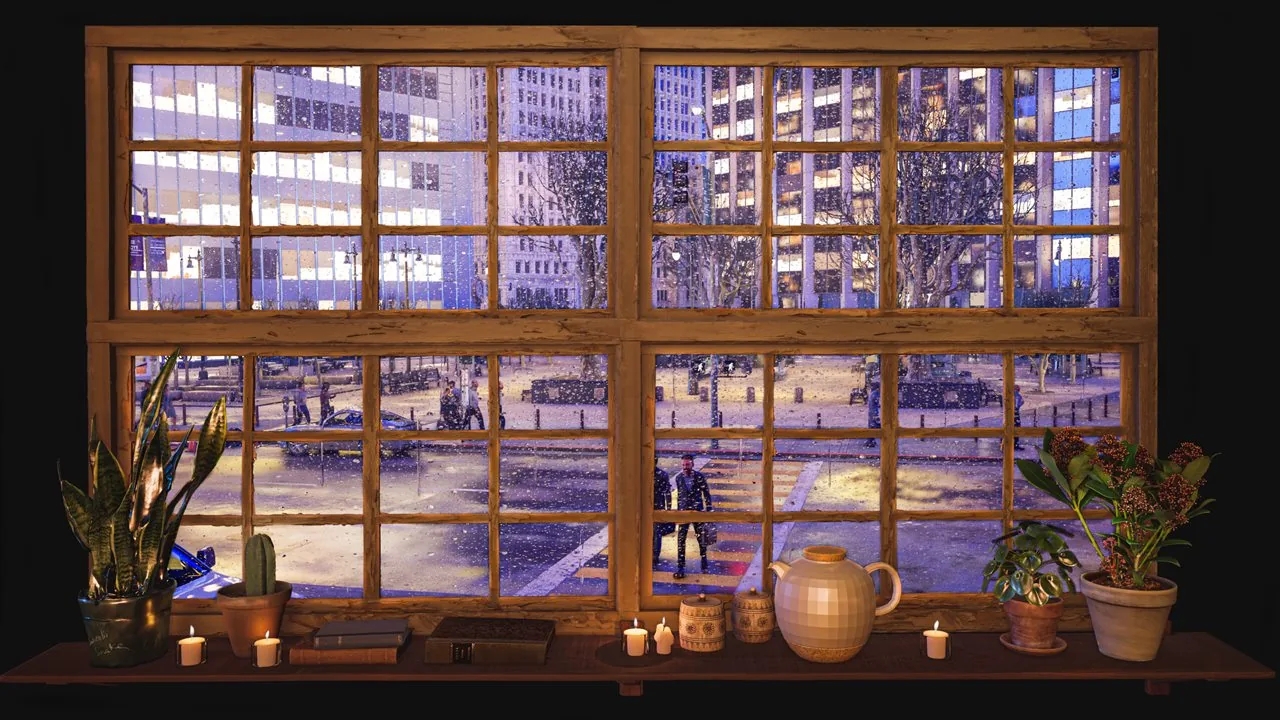
Snowy City Window Ambience is the catalog's clearest winter option. Snow, city light and warm decorative details create a soft seasonal background for living rooms, bedrooms and quiet holiday gatherings. Watch Snowy City Window Ambience on YouTube.
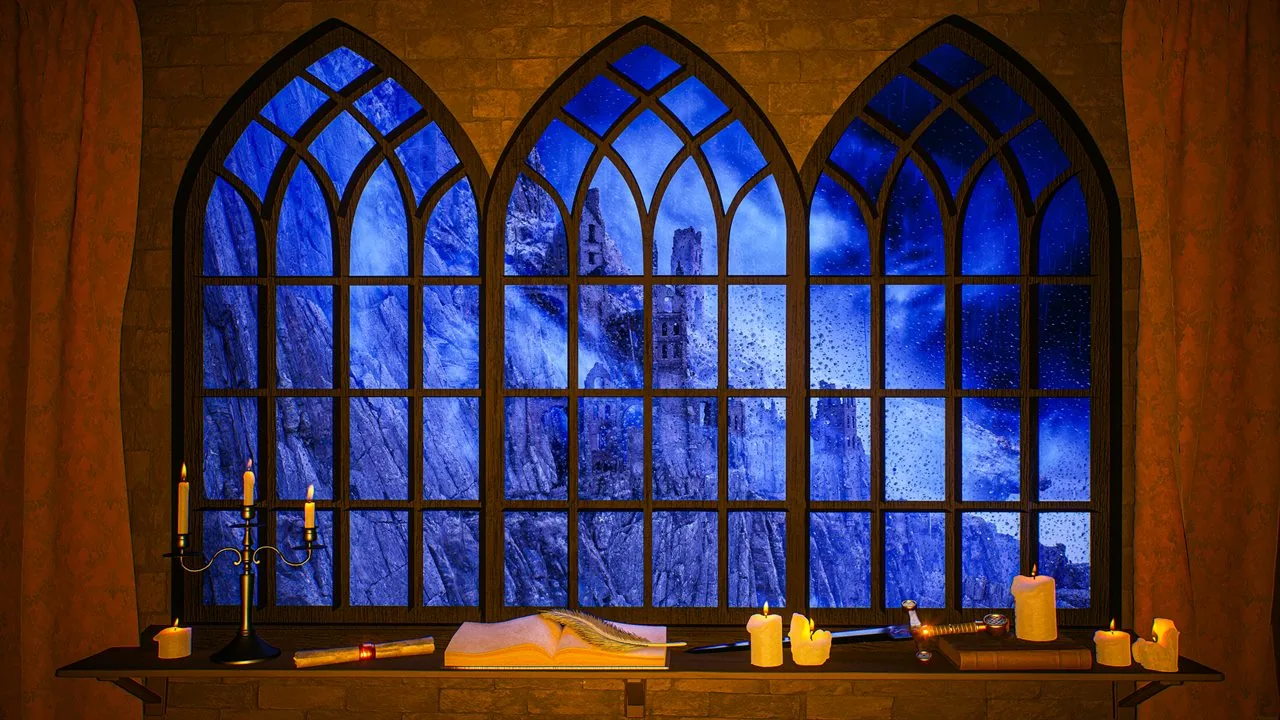
Rainy Gothic Castle Window Ambience is designed for fantasy mood, dark libraries and more theatrical interiors. Blue night tones and candlelit medieval details make it more expressive than the everyday city or forest scenes. Watch Rainy Gothic Castle Window Ambience on YouTube.

Ocean Ruins Cave Ambience is the most cinematic scene in the collection. The cave frame, ocean atmosphere, mist and distant ruins suit immersive decor, themed rooms and occasions when the TV is allowed to carry more visual weight. Watch Ocean Ruins Cave Ambience on YouTube.
Optimal TV settings for ambience
Start with a neutral picture mode such as Cinema, Filmmaker or Standard rather than a vivid showroom preset. Names vary by manufacturer, so judge the result from your usual seat. Reduce brightness until the screen sits near the level of the room lamps while rain, window frames and distant details remain readable.
Turn off or reduce aggressive motion smoothing, dynamic contrast, artificial sharpening and color enhancement. These processes can make rain shimmer, outlines look brittle and slow motion feel unnaturally fluid. A calm background benefits from restrained processing and consistent luminance more than maximum impact.
Use the TV's warm color temperature if the room has warm lamps, or a neutral setting for daylight and green nature scenes. Avoid adjusting the image to match a single thumbnail; let the video play for several minutes and check both its brightest and darkest moments before settling on a level.
Set sound low enough that it blends with the room. Built-in TV speakers are usually sufficient for rain or city ambience because precise cinematic placement is not the goal. If voices, calls or reading are important, mute the video or choose a very low level. Use a sleep timer or playback timer for bedtime rather than relying on memory.
Keep static interface elements off screen. Start playback, switch to full screen and avoid leaving menus or progress bars visible. If you want a larger image or a wall-based fake window, the projection guide explains throw distance, wall choice, placement, light and sound in more detail.
Samsung Art Mode, Apple TV screensavers and other alternatives
Samsung Art Mode is a strong option when the goal is to display still artwork with low visual impact and hardware designed to resemble a framed picture. It can integrate more discreetly than ordinary television. Long-form ambience serves a different purpose: weather, water, traffic, birds and changing light create a living scene rather than a static artwork.
Apple TV aerial screensavers provide polished landscapes, cities and slow camera movement with very little setup. They are well suited to short idle periods and broad scenic views. A window ambience video is more contained and continuous, which can make it easier to use as room decor for a full reading session, dinner or evening routine.
Photo slideshows, digital art apps, aquarium videos, candlelight ambience channels and nature livestreams can all be appropriate. The useful question is not which format wins in every room, but which one gives you the right balance of movement, continuity, sound and attention. Use still art when stillness is the priority; use ambience when you want the room to feel gently inhabited by weather and depth.
Choose the scene the room can live with
The best TV background ambience is rarely the most spectacular thumbnail. It is the scene that still feels comfortable after an hour. Match brightness to the lamps, movement to the activity and color to the room. Start with rain or a restrained city window for flexibility, move toward forest or lake for natural calm, and use snow, gothic or ocean ruins when a stronger seasonal or cinematic identity fits.
Browse the complete Window Ambience Studio video gallery, open two or three promising scenes, and test them from the seat where you will actually read, work or relax. A few minutes of real-room viewing will tell you more than comparing thumbnails on a phone.
Mini FAQ
Can I use ambience videos as TV backgrounds?
Yes. Long-form ambience videos can turn a TV into a calm virtual window, moving decorative surface or quiet room background. Use full-screen playback, comfortable brightness and low sound so the display supports the room instead of dominating it.
What ambience videos work best on TV?
Videos with long duration, stable framing, slow continuous movement, restrained sound and consistent light usually work best. Rain windows, forests, lakes, snowy cities and warm interior scenes are reliable starting points.
Can I leave an ambience video on the TV for hours?
Long sessions are possible, but follow the display manufacturer's guidance, especially for OLED models. Avoid static menus and controls, use full-screen moving content, and turn the display off when the ambience is no longer needed.
Should TV ambience have sound?
Sound is optional. Low rain, forest, ocean or city audio can strengthen the scene, while silent playback works better during conversation, reading with music or focused work. The right choice is the one that remains unobtrusive.
Is a TV or projector better for a fake window background?
A TV is brighter, simpler and practical for daily use. A projector can create a larger and more architectural effect but needs suitable throw distance and light control. Choose according to the room rather than image size alone.
Explore long-form ambience scenes on the Window Ambience Studio channel.
Watch on YouTube →